The Stakes and the Cost of Visual Blindness
A major construction corporation from Eastern Ukraine approached me with a specific objective. Serious assets were on the table: 400 units of heavy specialized machinery, 4 asphalt concrete plants, and unique operational experience in frontline zones. On the horizon were merger negotiations with an international European investor (at the Mota-Engil level).
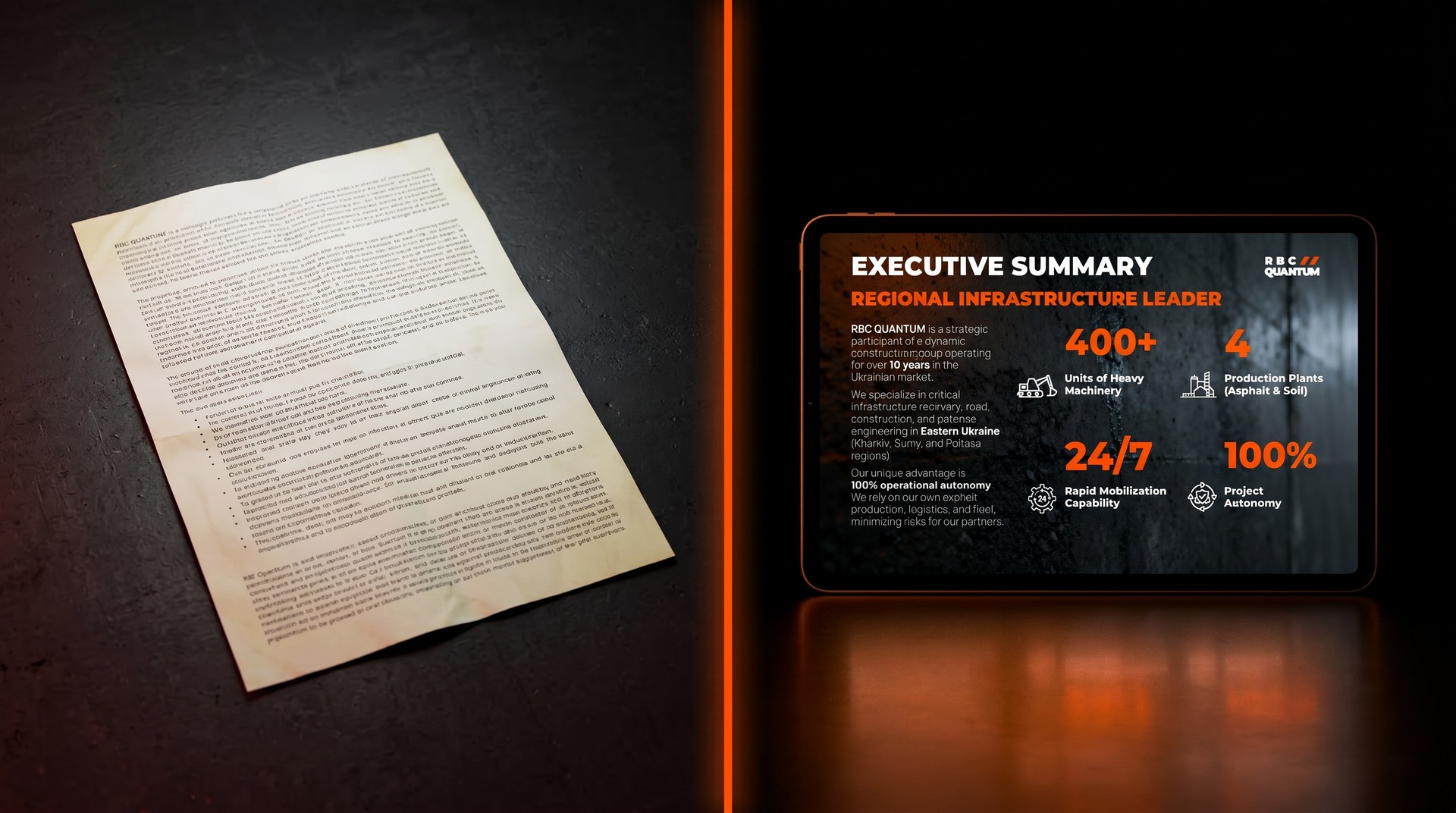
The problem lay in the packaging. The raw data was a continuous "wall of text" in a Word document. Had the client entered negotiations with such a document, the global corporation would have perceived them as a minor local subcontractor. Dirty asphalt and heavy machinery do not sell themselves. Investors buy predictability, standards, and systematic processes. I had to architect an asset that would transition the client from the status of a "petitioner" to an equal partner.
Engineering the Assembly of Meaning and Style
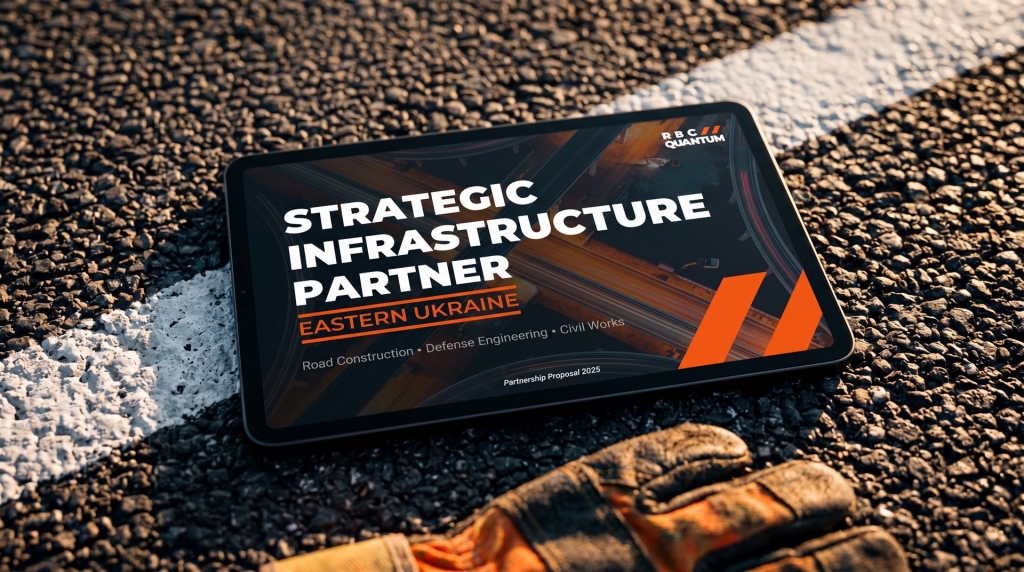
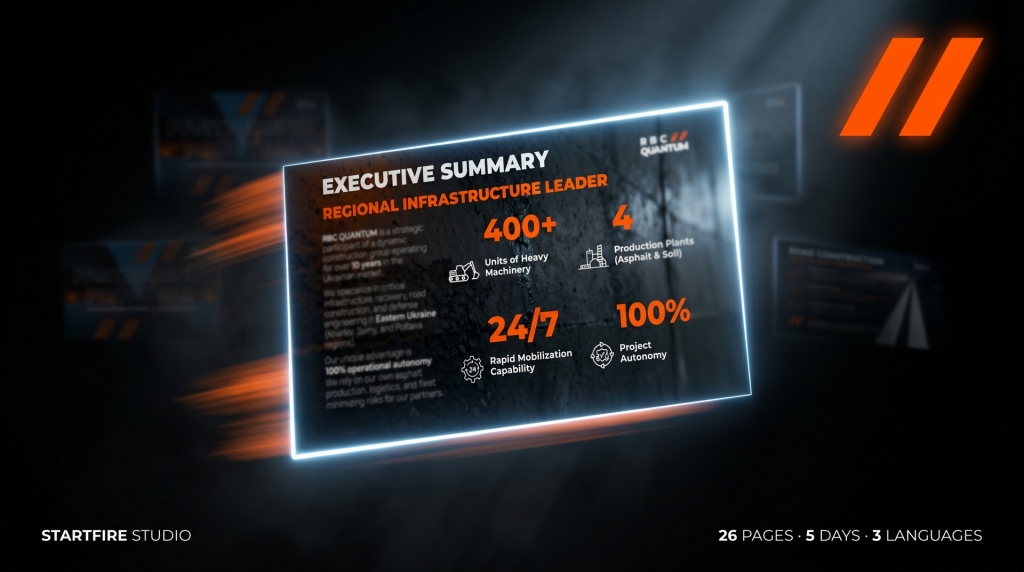
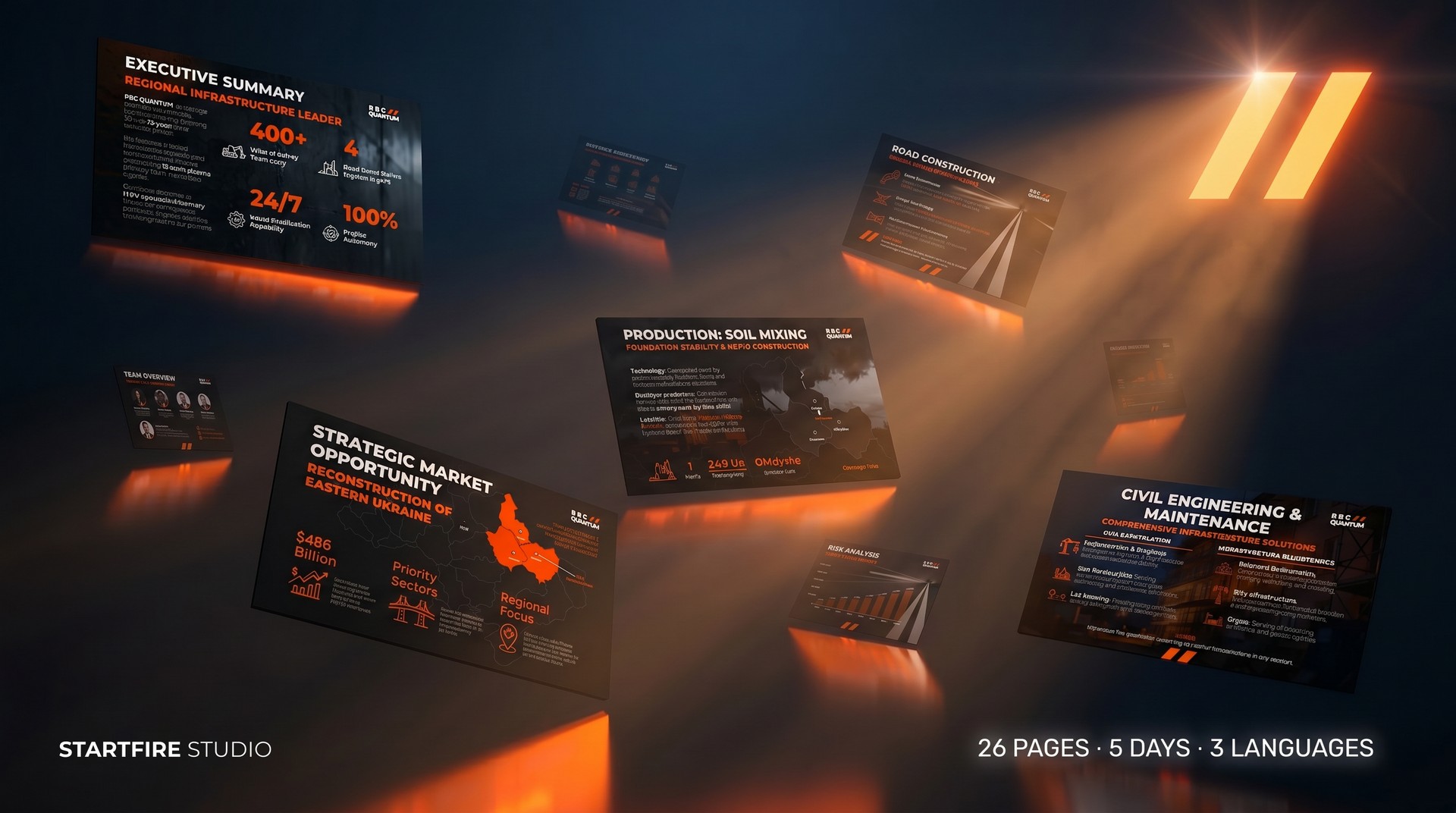
For B2B presentations of this caliber, a classic white background and stock photos of smiling workers are a failure. I developed a "Dark Industrial" aesthetic. A deep matte graphite background concealed the flaws of amateur photos from actual construction sites, rendering them cinematic. For the accent, I chose "Safety Orange"—the color of road markings and heavy machinery.
To make the brand look monolithic, I implemented a graphic identifier: a double industrial slash //. This international symbol of a construction zone (Hazard Marking) perfectly replaced outdated logos and became the visual anchor of the entire presentation, broadcasting dynamics and safety.
Complex typography (Montserrat Black and Manrope fonts) allowed me to create a "brickwork" effect. I ruthlessly cut the client's long paragraphs, transforming them into punchy key points. One slide equals one thought.

An Arsenal for the Negotiation Table
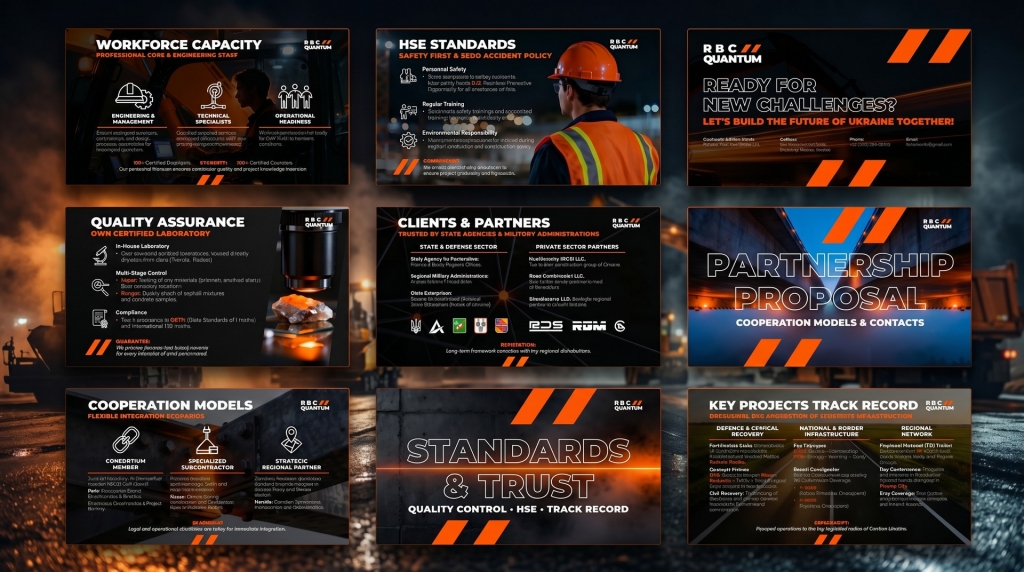
The final product ceased to be just a report. It transformed into a modular sales tool.
I rebuilt the narrative logic, bringing the "Synergy" slide to the first pages. Instead of simply listing the fleet, I positioned the core message upfront: "The investor has the capital; we have the land, the plants, and the administrative resources." I designed separate slides for quality control (Laboratories) and safety standards (HSE), addressing the main fears of foreign capital even before they were voiced at the meeting.
Validating the Value
The proper architecture of the document allowed the client to radically change the status of the negotiations. Immediately after delivering the English master file, the client approved the full layout of the localization and requested the creation of a separate guideline (Visual Identity System) to secure the new visual standard for the entire company.
Several months later, this same client returned to me to package an entirely new division—the renewable energy market. When design generates contracts, it becomes a long-term asset.
Are your brilliant assets getting lost in visual noise?
→ Schedule a technical review of my task
P.S. Proving that creating a B2B presentation is not just "putting text on slides," but the engineering of attention. I know, it sounds like magic.
 Facebook
 Startfire