The Blue Ocean and the Cost of Visual Blindness
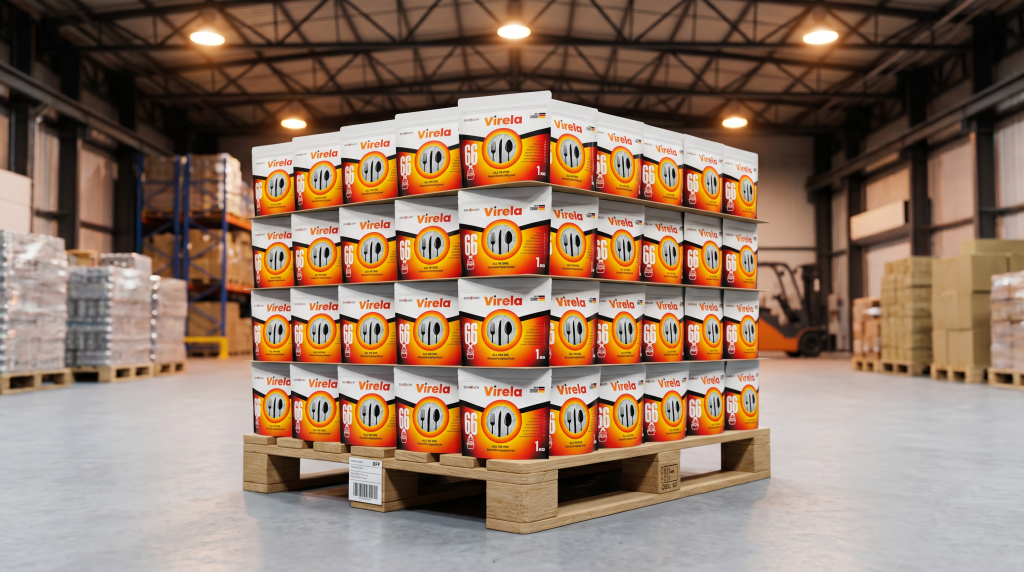
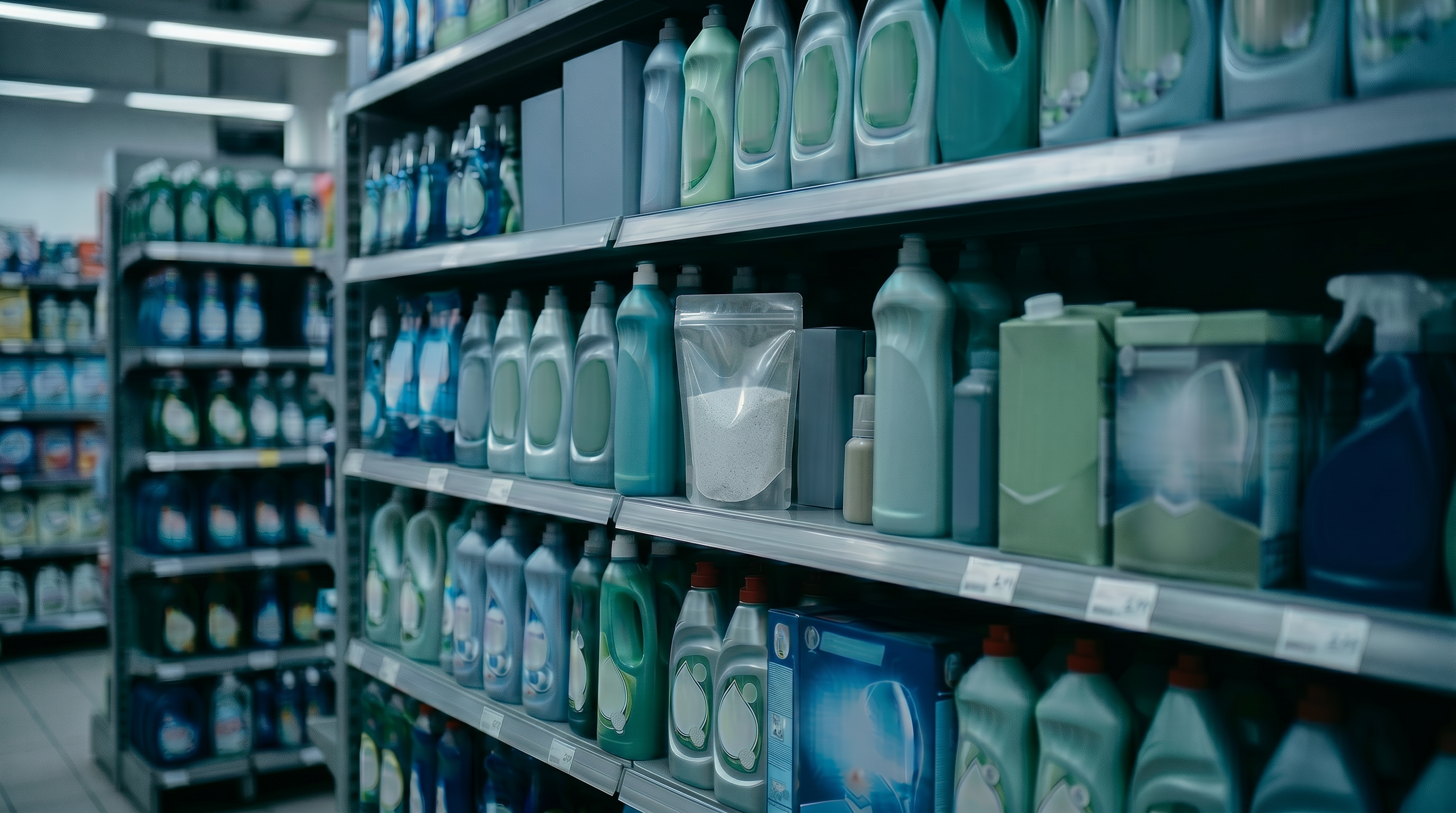
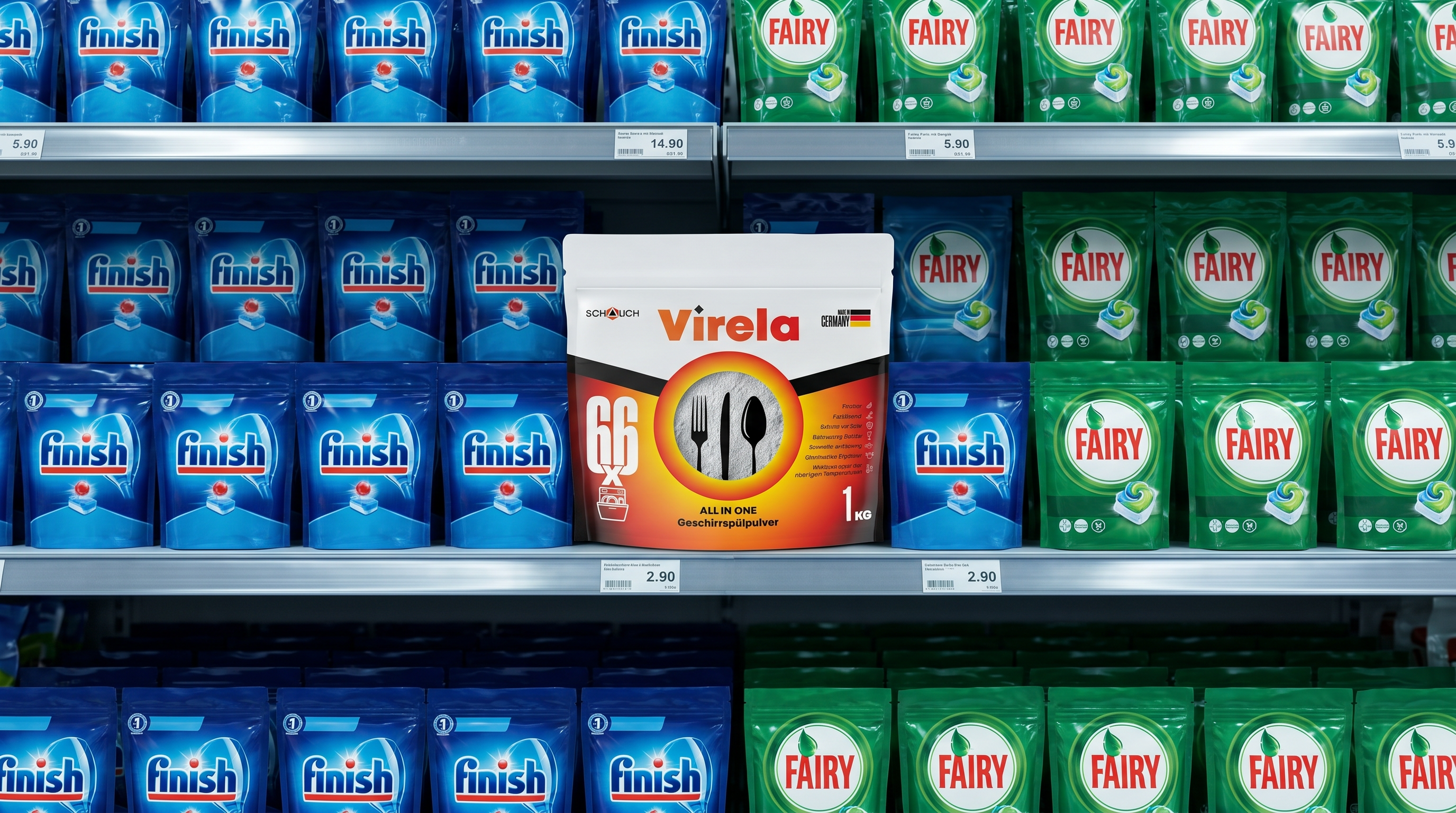
Fifty tons of premium German product. A tough local market that doesn't read German. And an endless supermarket shelf merging into a monotonous blue-green blur. These weren't just inconvenient constraints. It was a direct risk of a high-end product turning into dead stock. The situation was heavily compounded by the technical format: the brand was transitioning to flexible doypacks and shrink sleeves. A single error in applying the white underprint or calculating film distortion would cost the distributor the entire film production run.
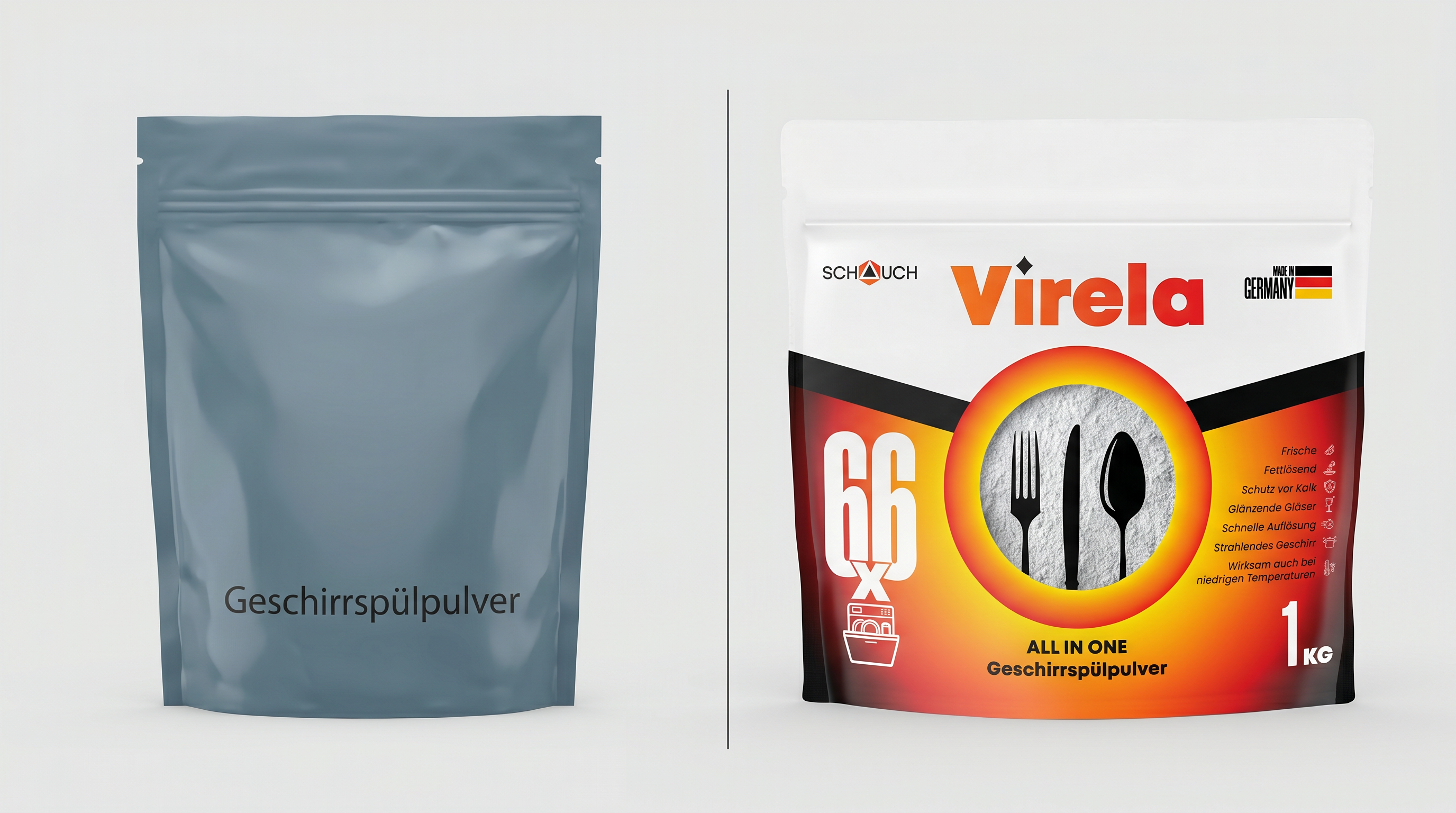
The Physiology of Attention and Color Surgery
Aesthetics without engineering is visual entropy. I refused to compete with local brands using their standard palette. To break through the buyer's "banner blindness," I engineered a system built on contrasts.
-
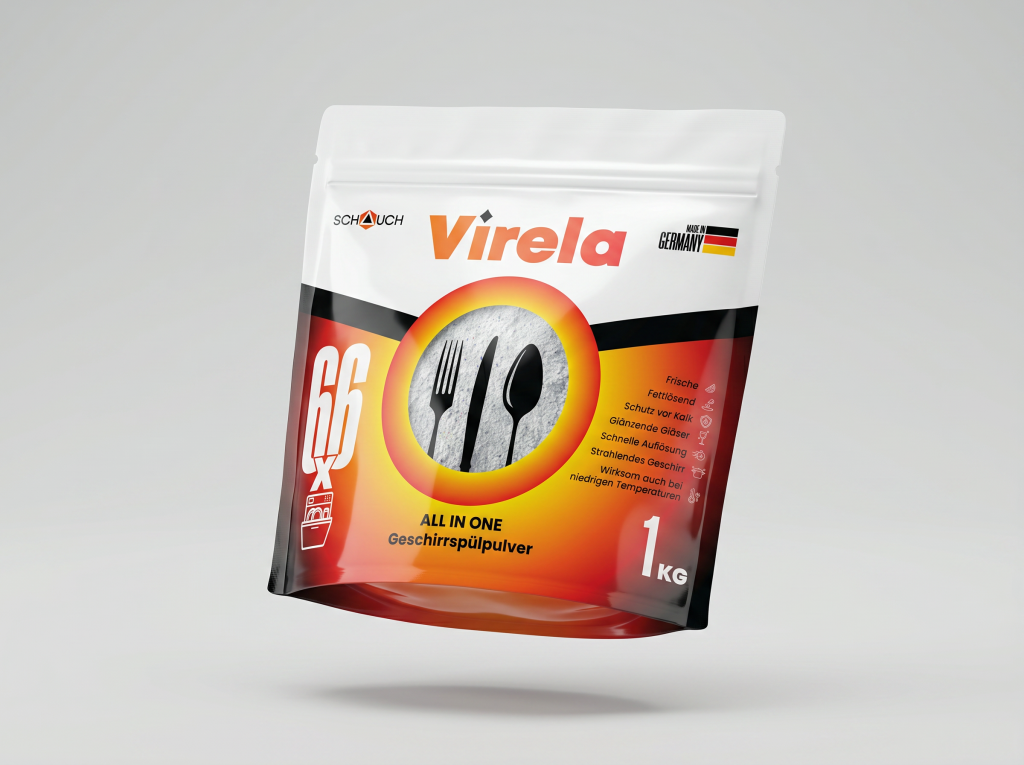
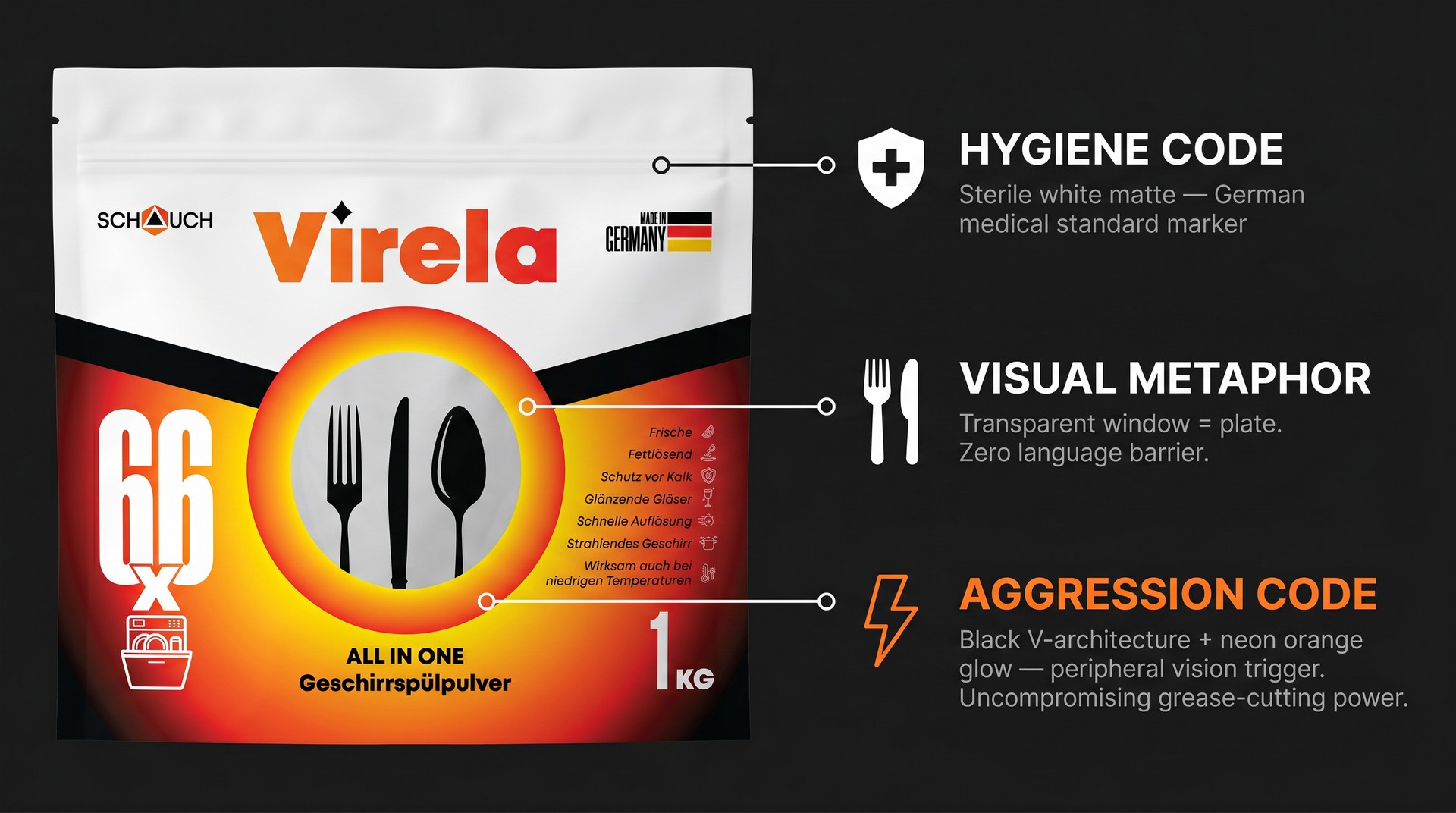
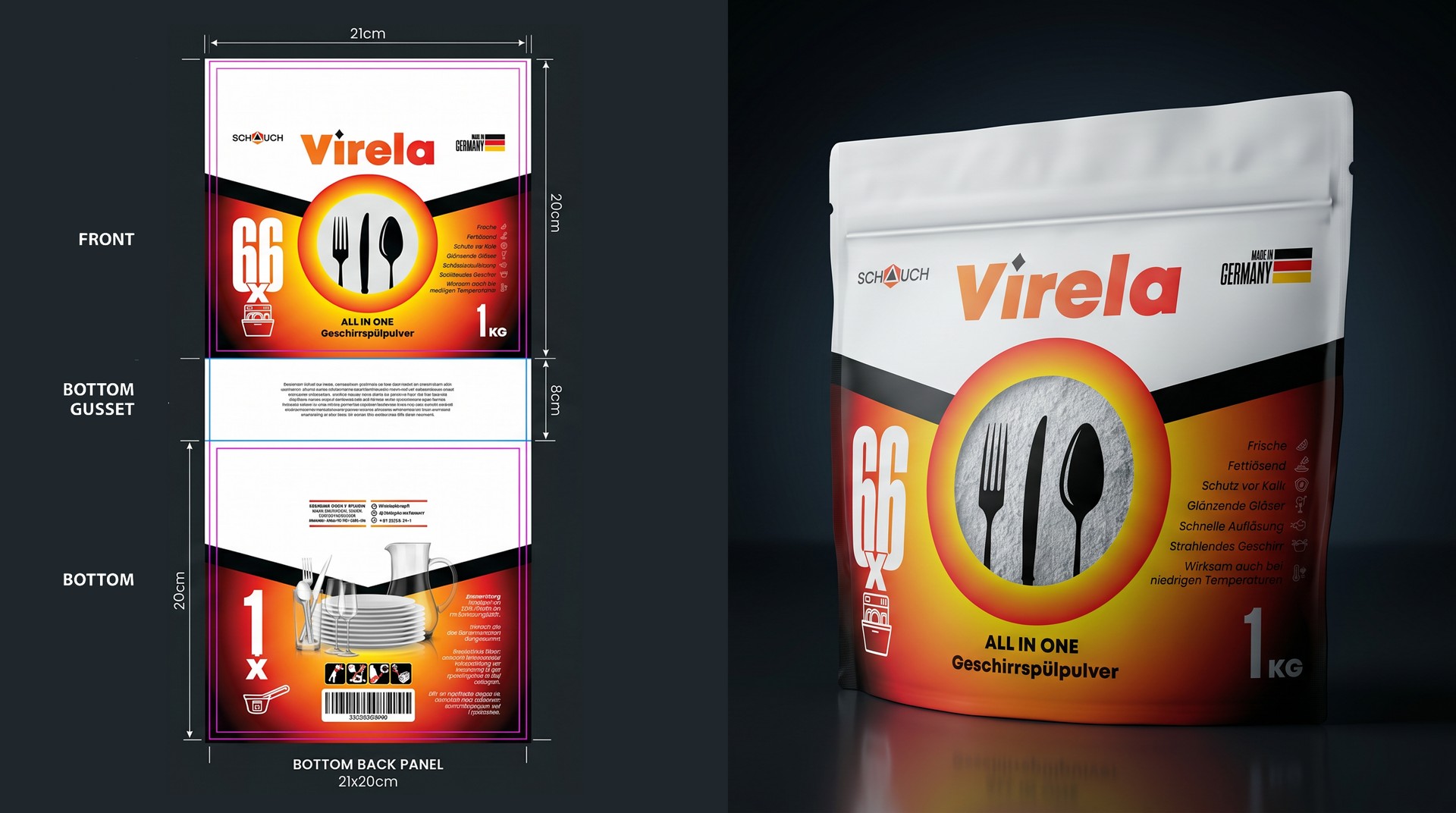
The Code of Hygiene and Aggression: The upper section is a sterile matte white. It acts as an unconditional trigger for German medical standards. The lower zone is formed by a rigid black V-shaped architecture containing a neon-orange glow. This is a physiological trigger for peripheral vision, signaling uncompromising grease-cutting power.
-
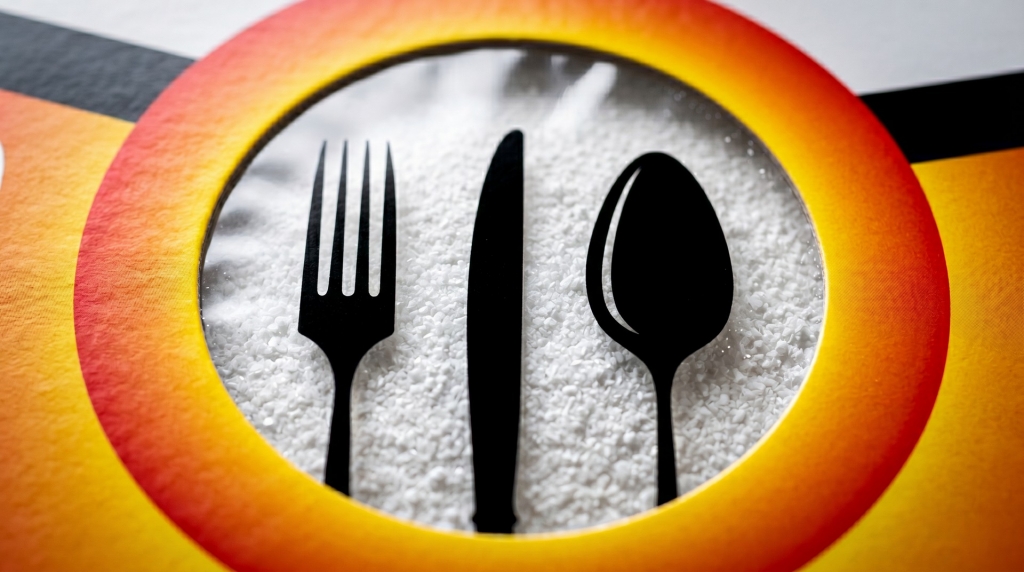
The Semantic Interface: Long German terms block perception. I removed the cognitive load by integrating solid black cutlery silhouettes directly into the transparent product window. Against the white powder inside, they act as an instant semantic anchor.
From Pixels to Shrink Sleeves: Pre-press Engineering
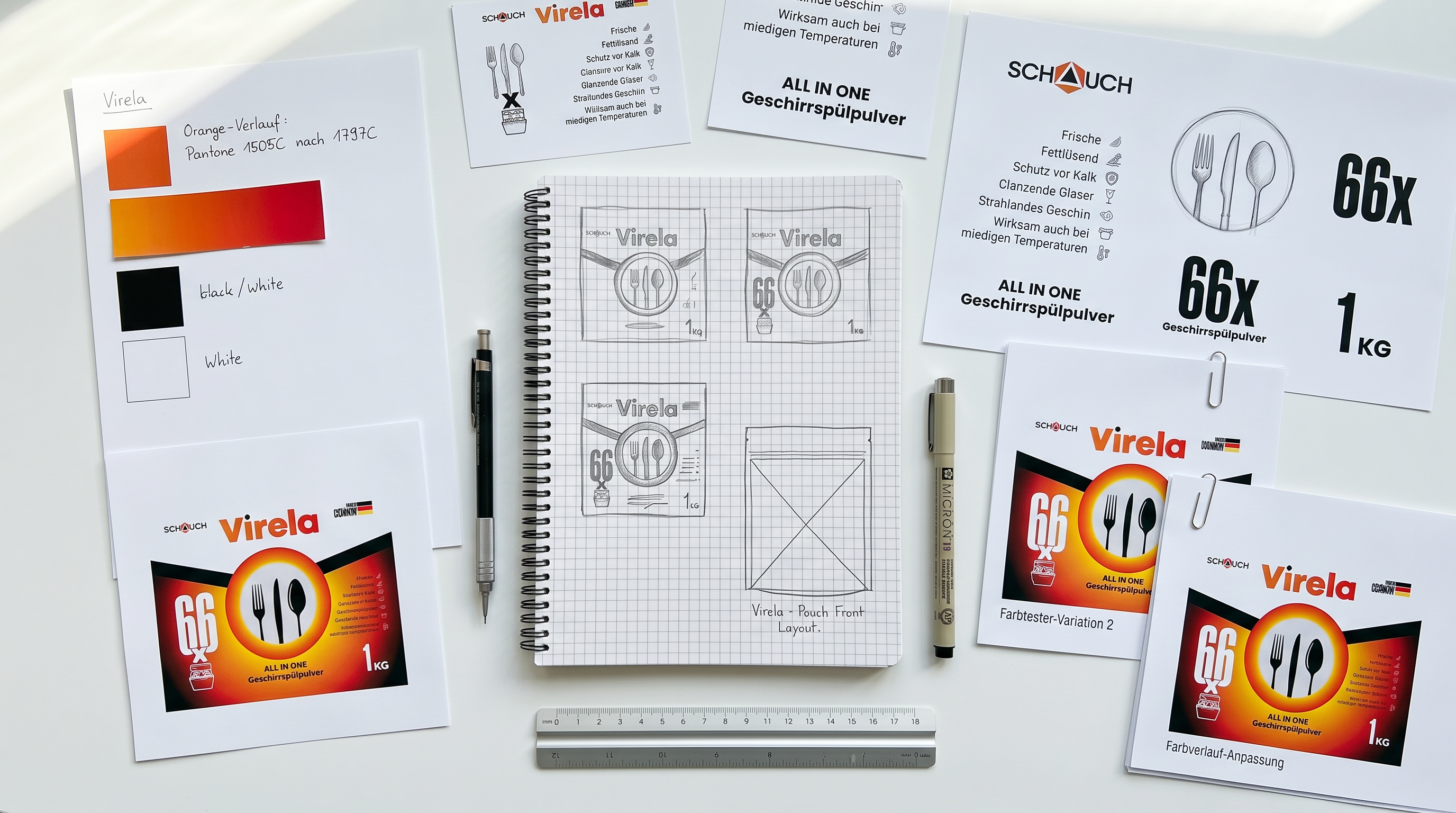
Real packaging design doesn't end with a beautiful render on a screen. It ends in the printing press. For flexo printing on transparent foil, I performed surgical channel work.
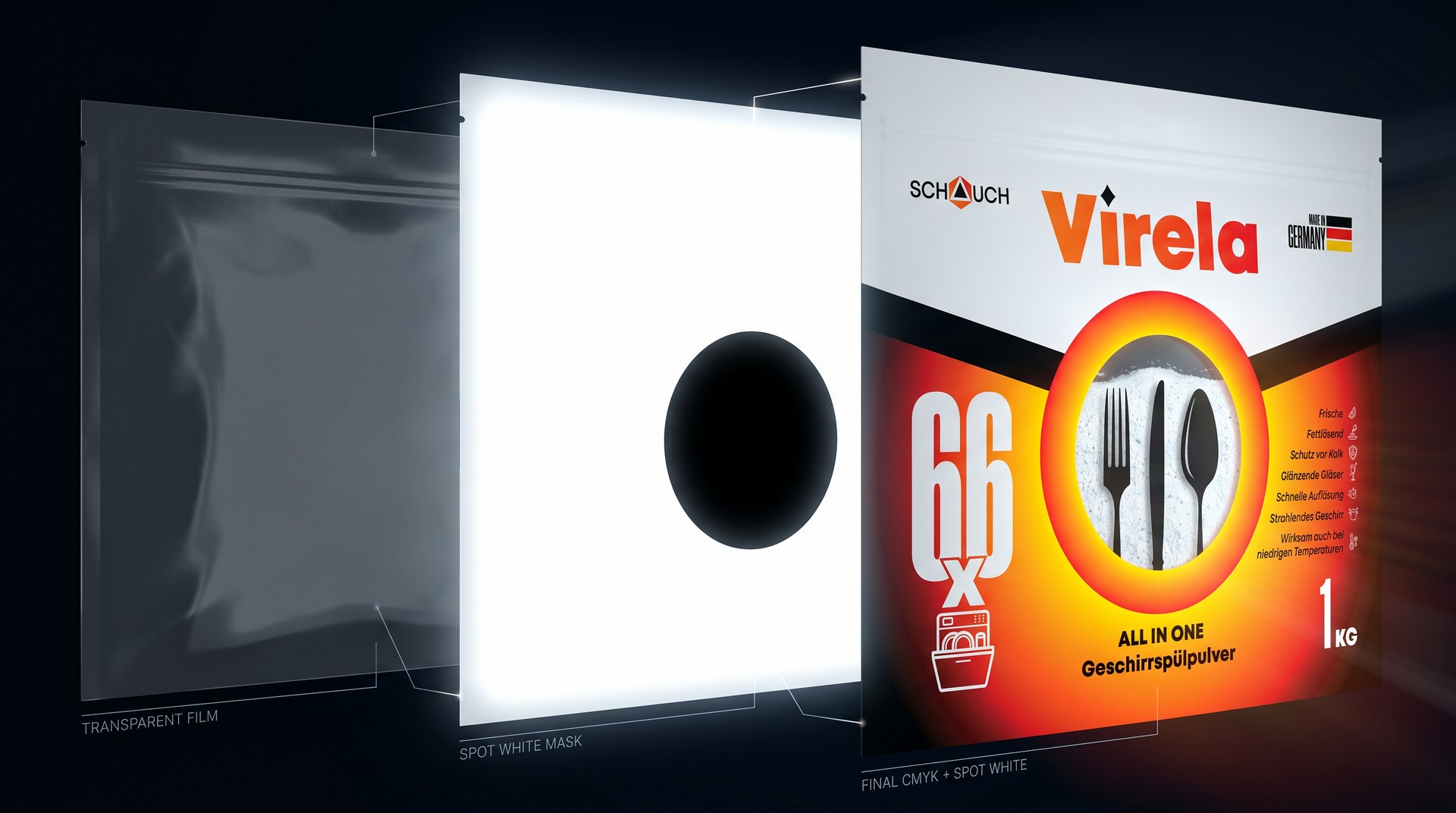
I manually generated the Spot White layers. The white ink blocks the background, keeping the CMYK colors dense during overprinting, while leaving the central window crystal clear. When adapting the design for the SORB 302 shrink sleeve line, I recalculated the safe zones to guarantee the typography wouldn't distort on the curves of round and square bottles after shrinking.
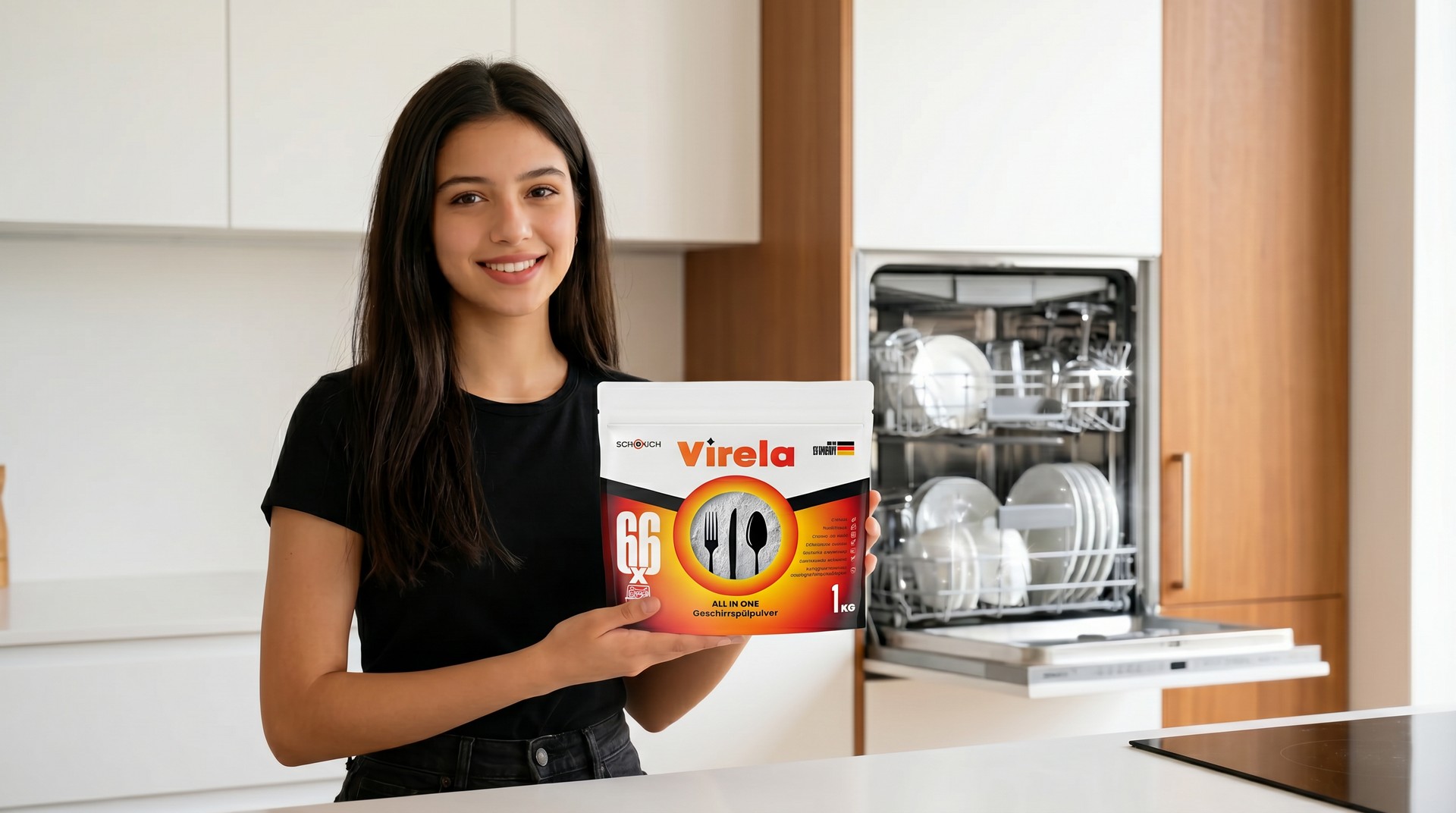
The final file has gone to print. 1 kg stand-up pouch, 21 cm wide, 20 cm tall. The client received not just a design, but a predictable asset: packaging that works equally well at the market and in a WhatsApp group chat, where people share photos of the product with the caption, “Look what we brought back from Germany.”
Scaling the Asset
The engineering approach to pre-press (from trapping setup to white masks) allowed the 50-ton run to launch without a single flaw. The uncompromising shelf impact meant that right after the doypack was approved, I immediately secured an order to scale the visual system across two additional shrink sleeve SKUs.
Your product deserves to be noticed, and your production run printed flawlessly.
→ Discuss My Packaging Project
P.S. I know how to ensure your brand colors on transparent film don't turn into a muddy puddle.
 Facebook
 Startfire