
The Anatomy of Construction Compromises
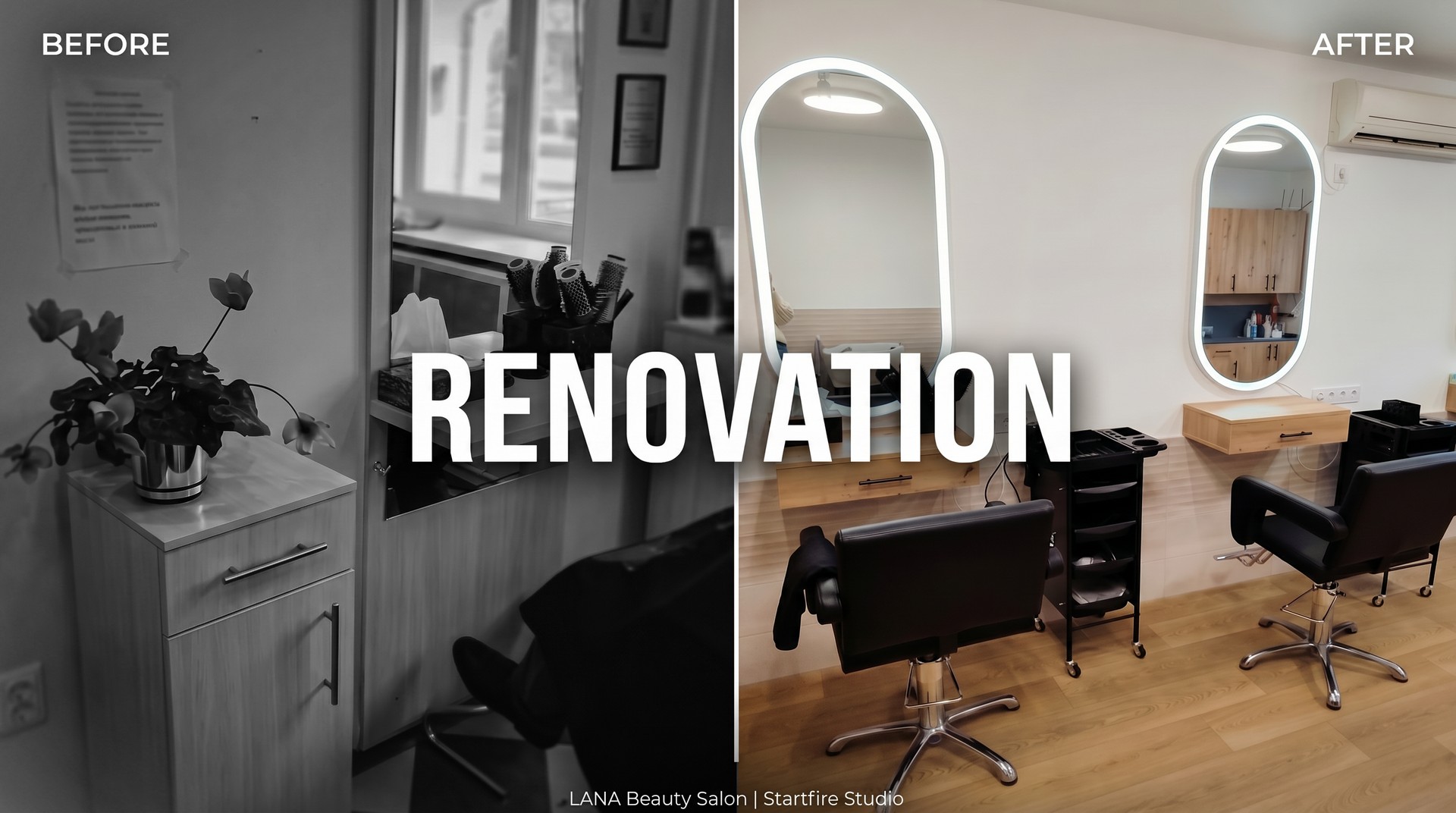
The task seemed classic: update the interior of a salon that had been operating for 22 years. But reality dictated harsh rules. We had to navigate a government grant deadline and the physical limitations of a space that hadn't seen a renovation in two decades.
Renovation tolerates no fantasies. We couldn't simply tear up the old floor—removing the tiles proved too time-consuming and expensive. Exposed heating pipes were in the way, and narrow doorways dictated the dimensions of the future furniture. The client risked getting stuck in a maze of disjointed ideas and ending up with a beautiful picture that was physically impossible to build.
Engineering Aesthetics: From Layout to Lighting
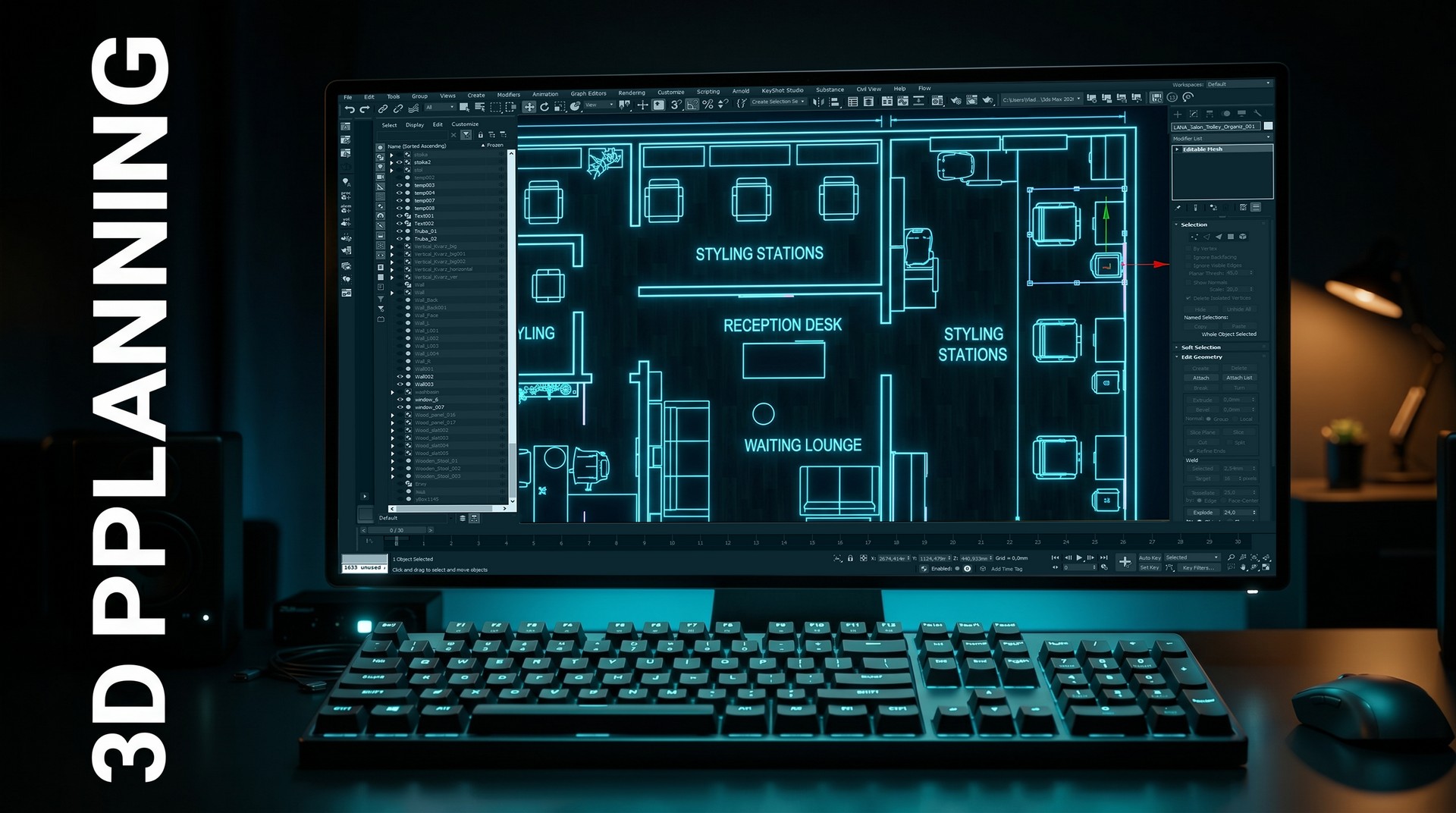
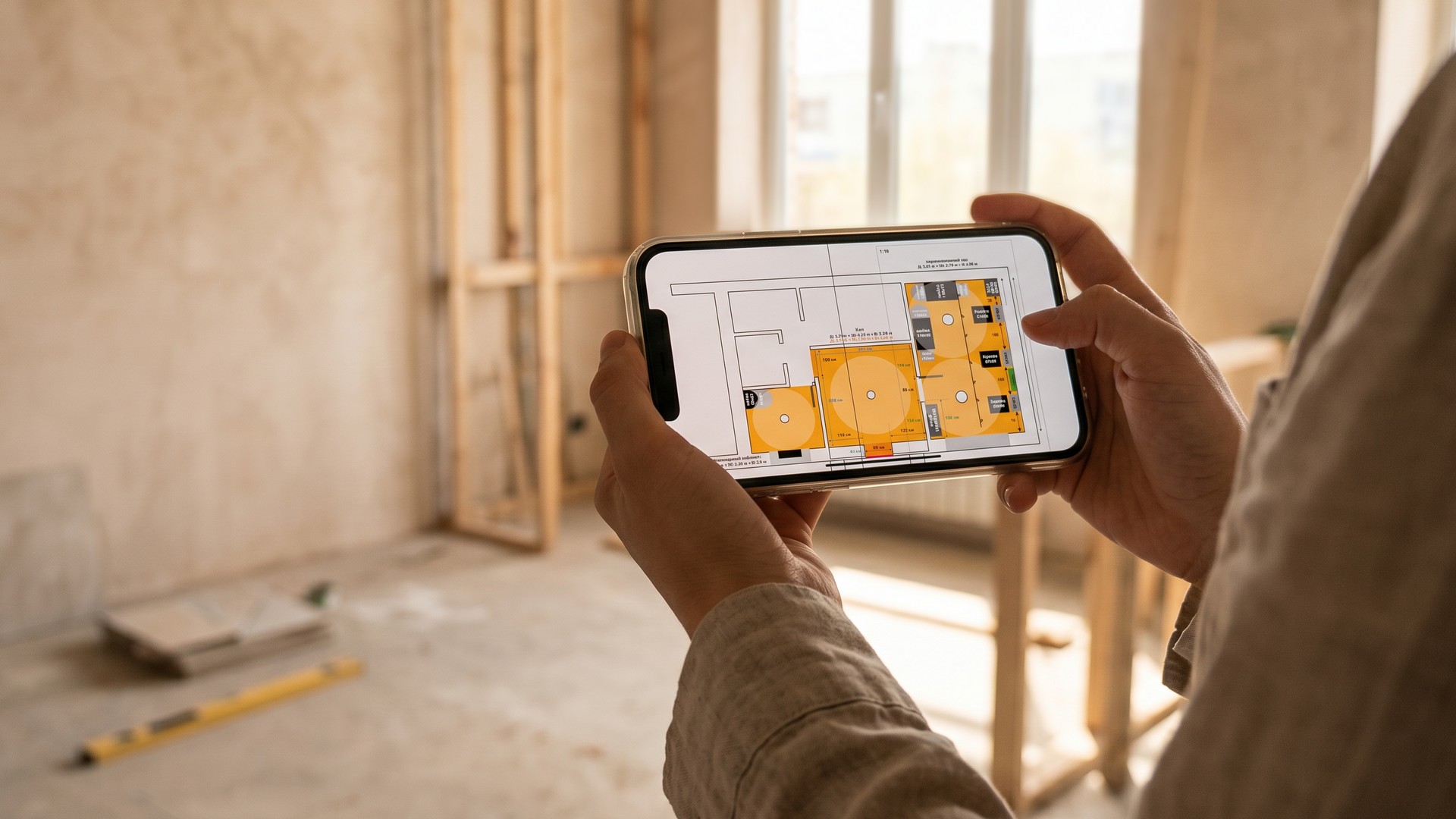
Instead of imposing a single "correct" option, I created an exact 3D replica of the rooms. It became our digital laboratory. I approached the task as an engineer, measuring every single centimeter.
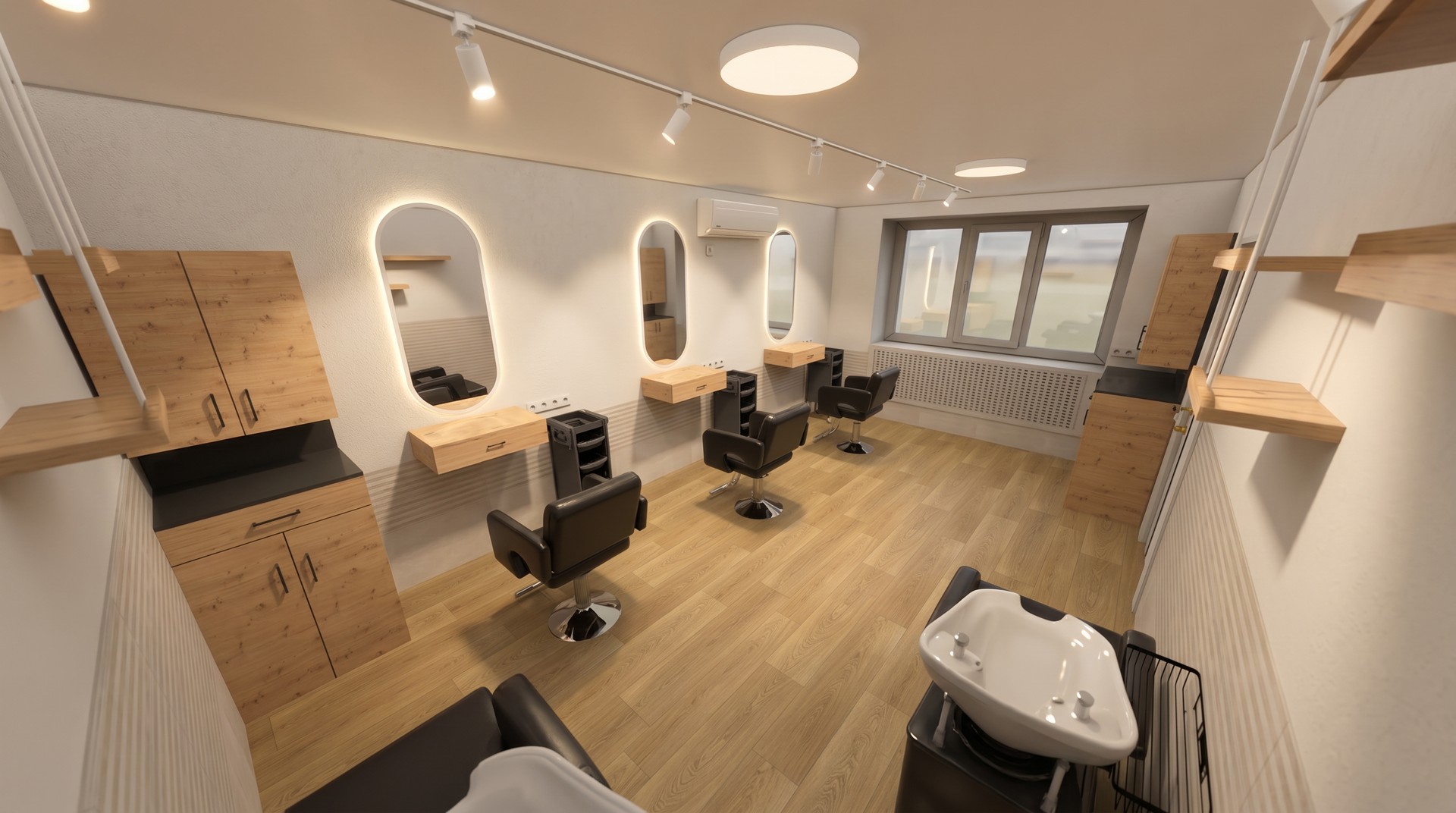
We "lived through" dozens of scenarios in real time. We rotated the washbasins at a 45-degree angle, searching for the perfect arrangement in the hair styling hall so a 180 cm tall stylist wouldn't bump into walls, and trolleys could pass freely between chairs. For the sake of this meticulous ergonomics, we had to design custom-sized furniture, discarding factory templates.
Synthesis of Textures and Commercial Lighting
The concept of "cozy eco-minimalism" demanded a perfect balance of materials and budget.
-
Adapting Coverings: When it became clear there was no one to pour a new floor, we found the perfect compromise. Heavy-duty commercial linoleum (Lentex Pioneer Oak) was laid directly over the old tiles. I adjusted the 3D renders for every actual sample found in the store (down to the "Artisan" chipboard SKU) so we could see the true picture.
-
Light as a Business Tool: In the beauty industry, light is money. To allow stylists to accurately match hair dye shades (without yellowing), I designed a combined lighting system. Track lights on black rails set the style and provide directional light, while a shadowless 4000K base ensures perfect color rendering (CRI >90).
-
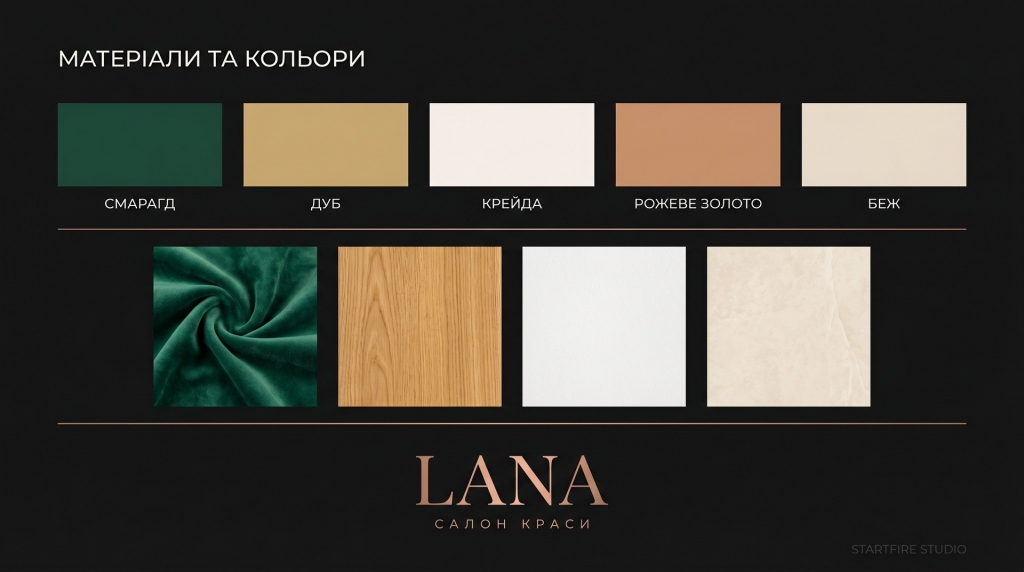
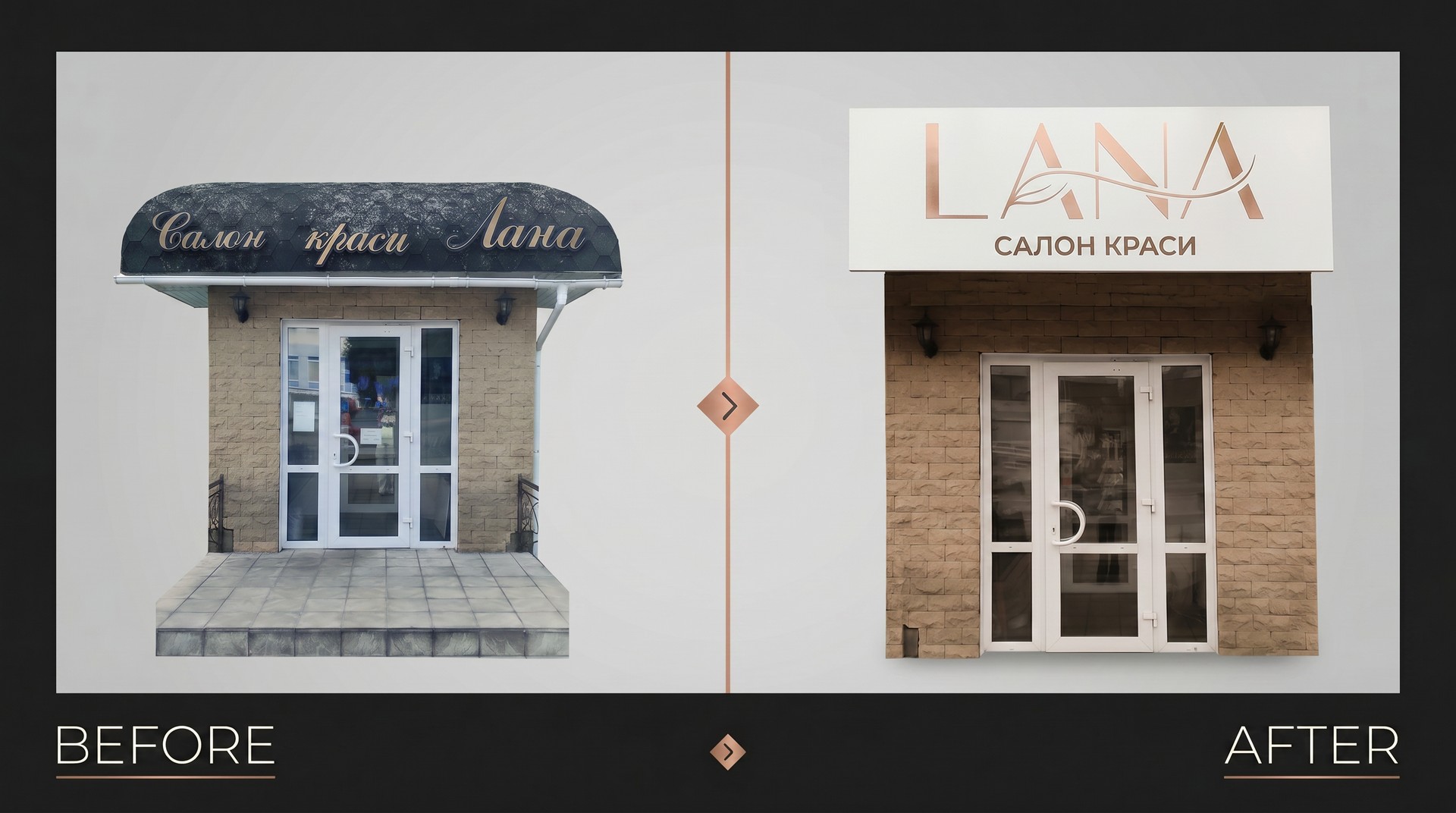
Brand Identity: In parallel, I developed the new "LANA" logo in a "rose gold" shade. The smooth line with a leaf motif became the starting point for the decor—this motif echoes the mirrors and the facade, instantly transforming the entrance group.

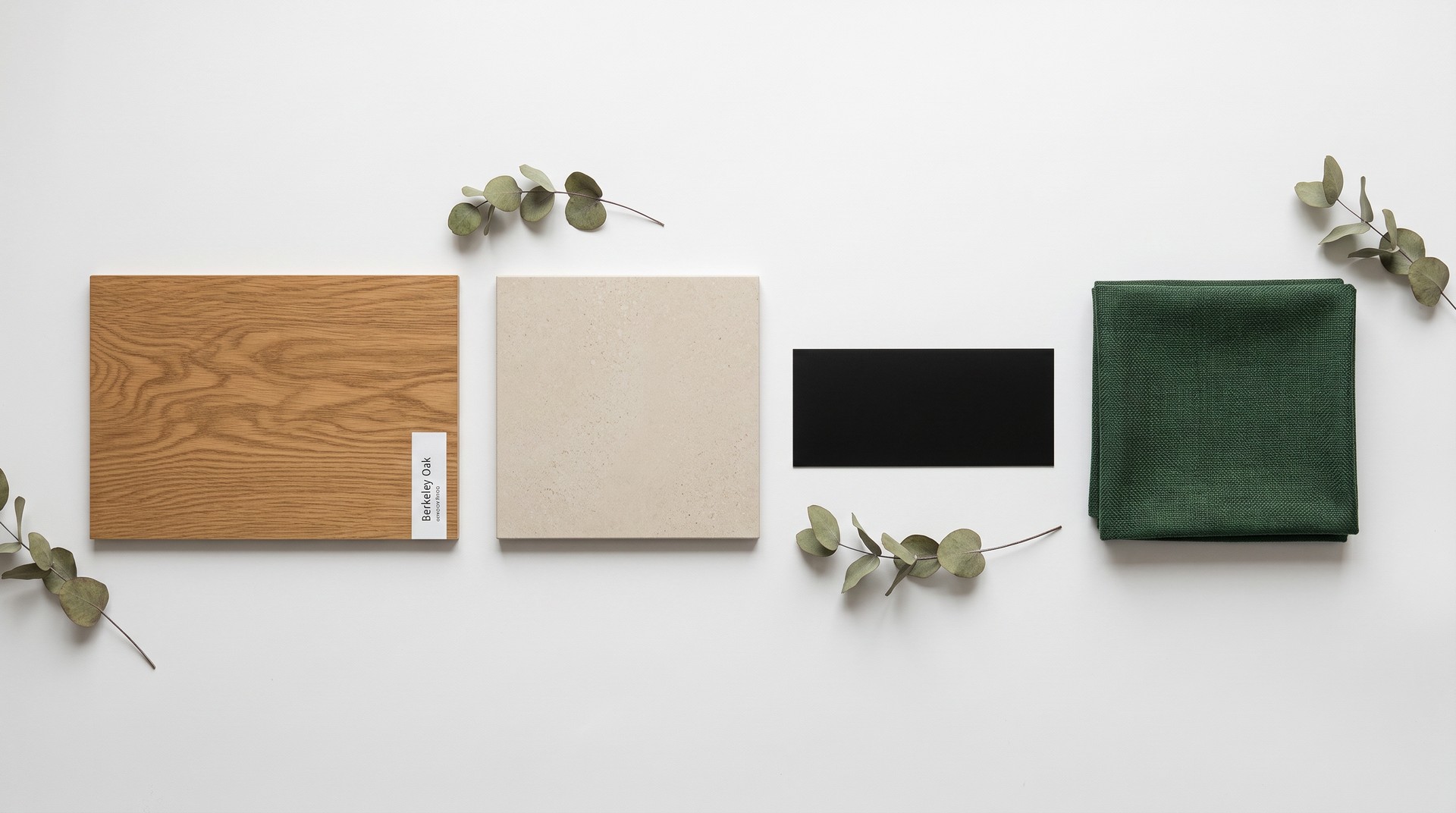
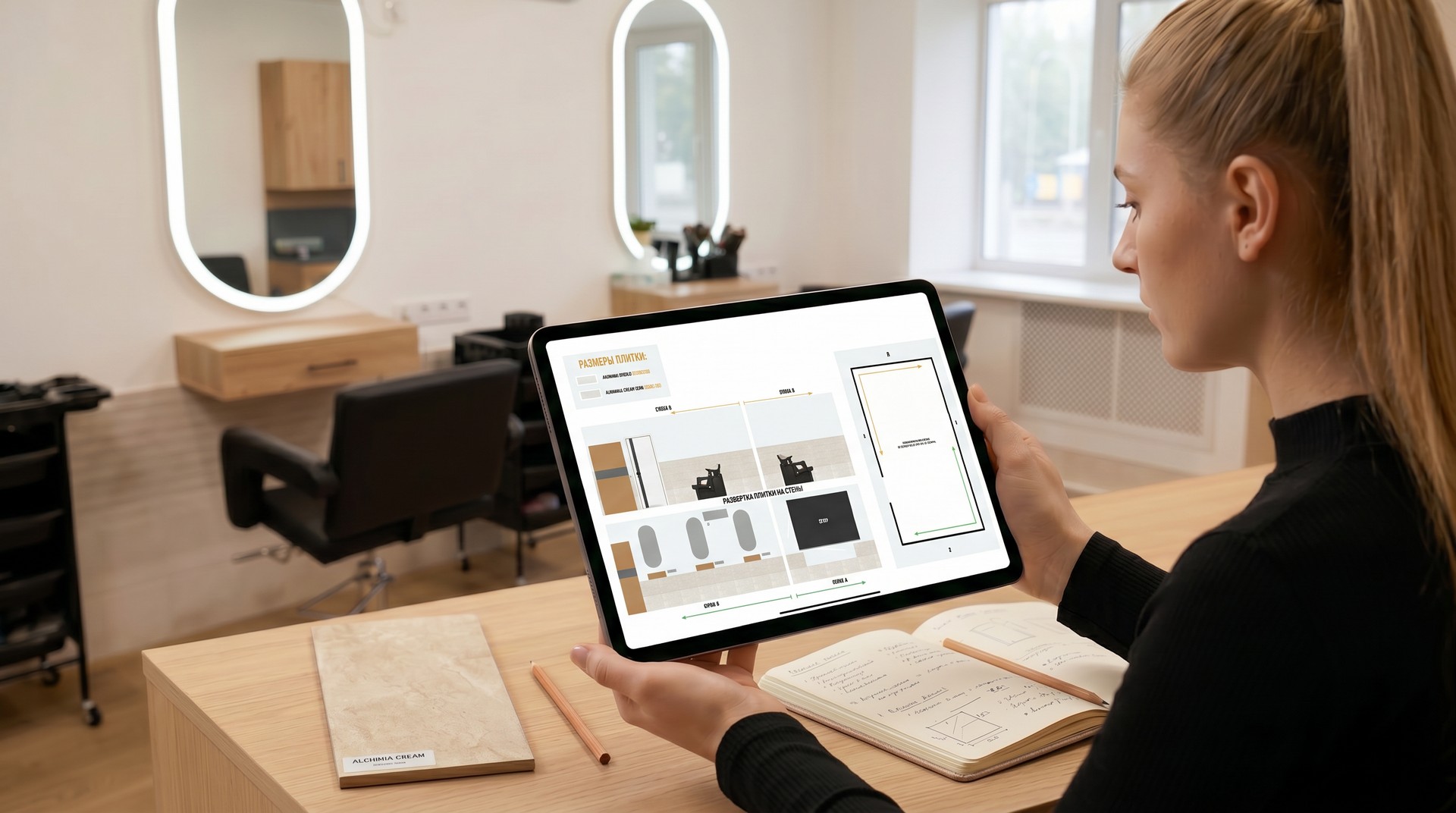
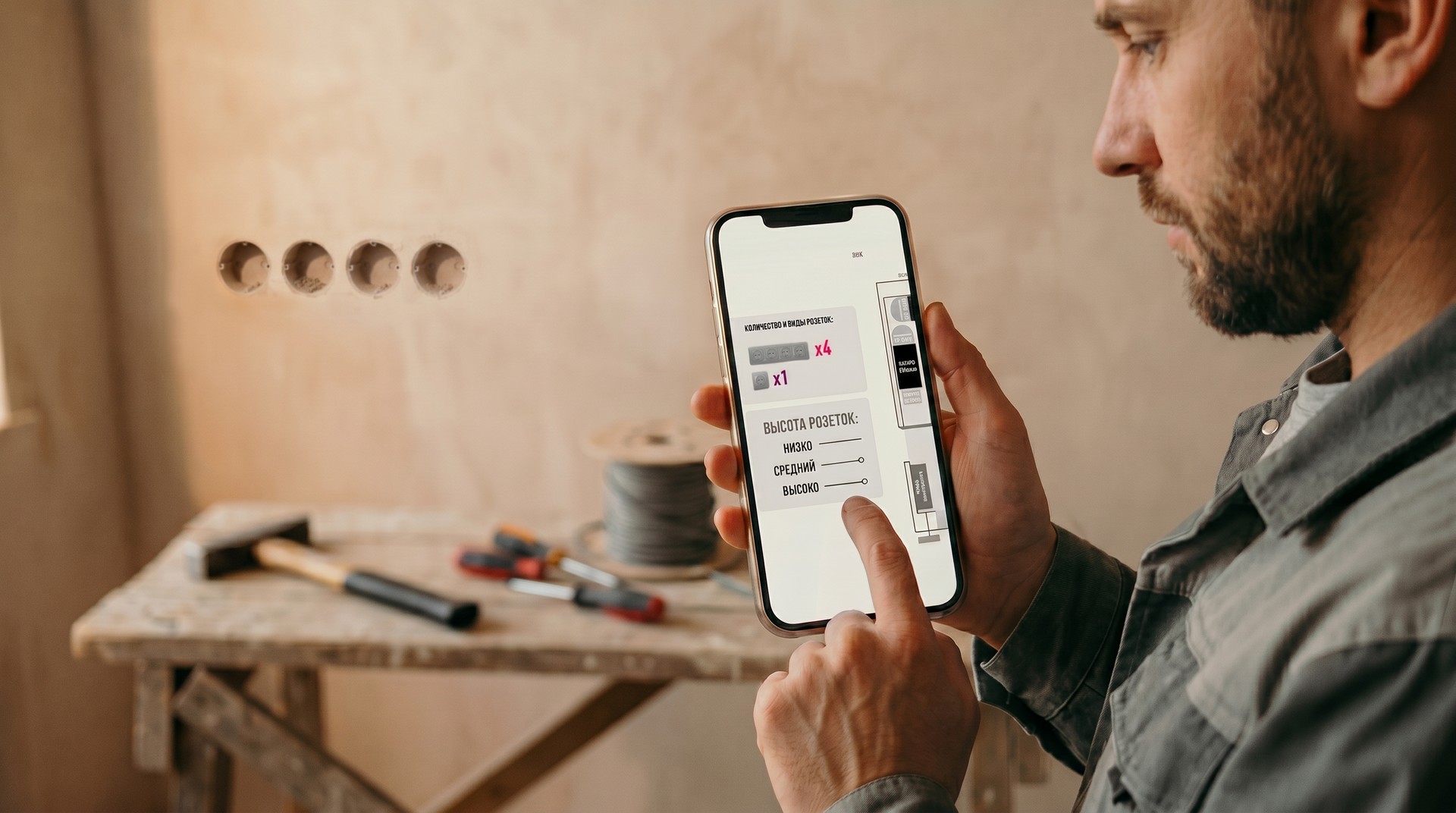
Ultimately, we received not just a set of renders, but a fully prepared manual for the builders and furniture makers. Every element in the visualization—from the wall color to the height of the hairdryer outlets (exactly 90 cm from the floor)—was calibrated, approved, and had its real SKU in the hardware store.
The Customer Journey: From Facade to Private Zones
Blueprints and Excel spreadsheets are just the framework. But to understand how this engineering works in practice, you need to walk the path of the salon's client. I constructed the visual narrative so that the "eco-minimalism" aesthetic flowed smoothly from one room to another without losing functionality.
Touchpoint: The Face of the Brand and the Hall
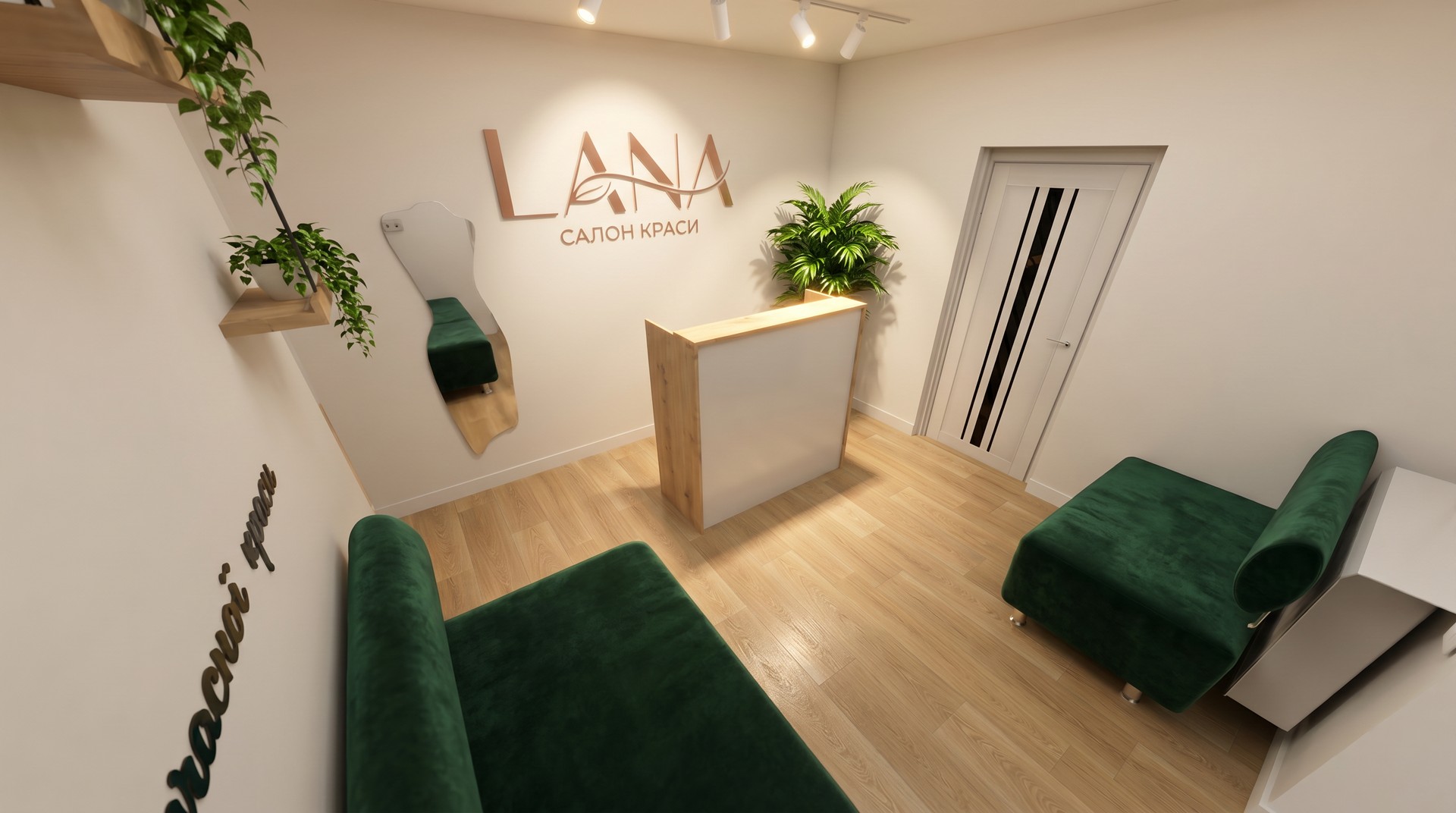
The introduction begins on the street. The old green canopy visually "cheapened" the salon. We cleaned the facade of visual noise, installing a strict white sign with dimensional letters in a "rose gold" shade. Crossing the threshold, the client enters the reception area. There is no oppressive cramping here—light panels and hidden mirror backlighting physically expand the space, setting a premium tone.
Main Hall: The Geometry of Comfort
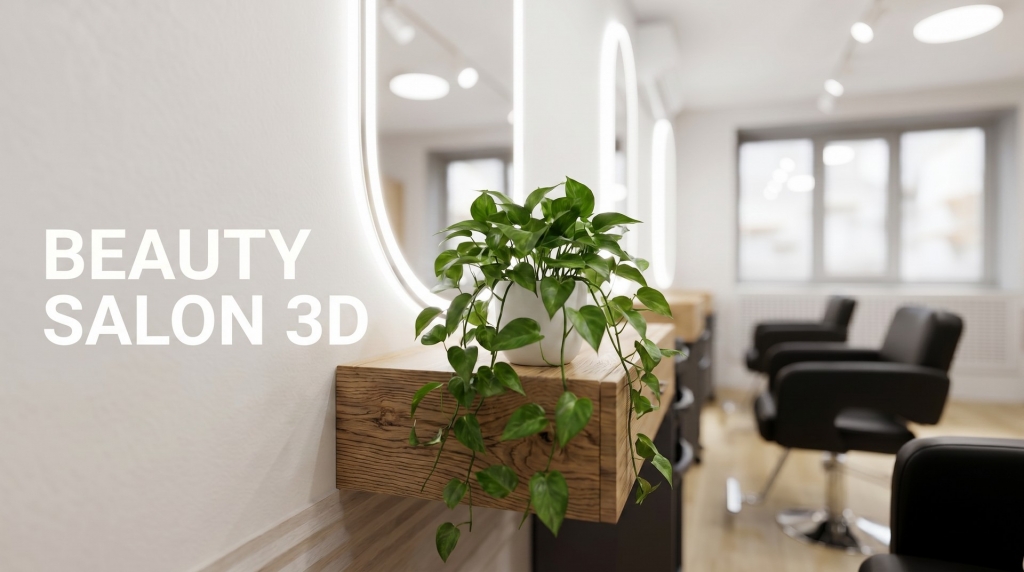
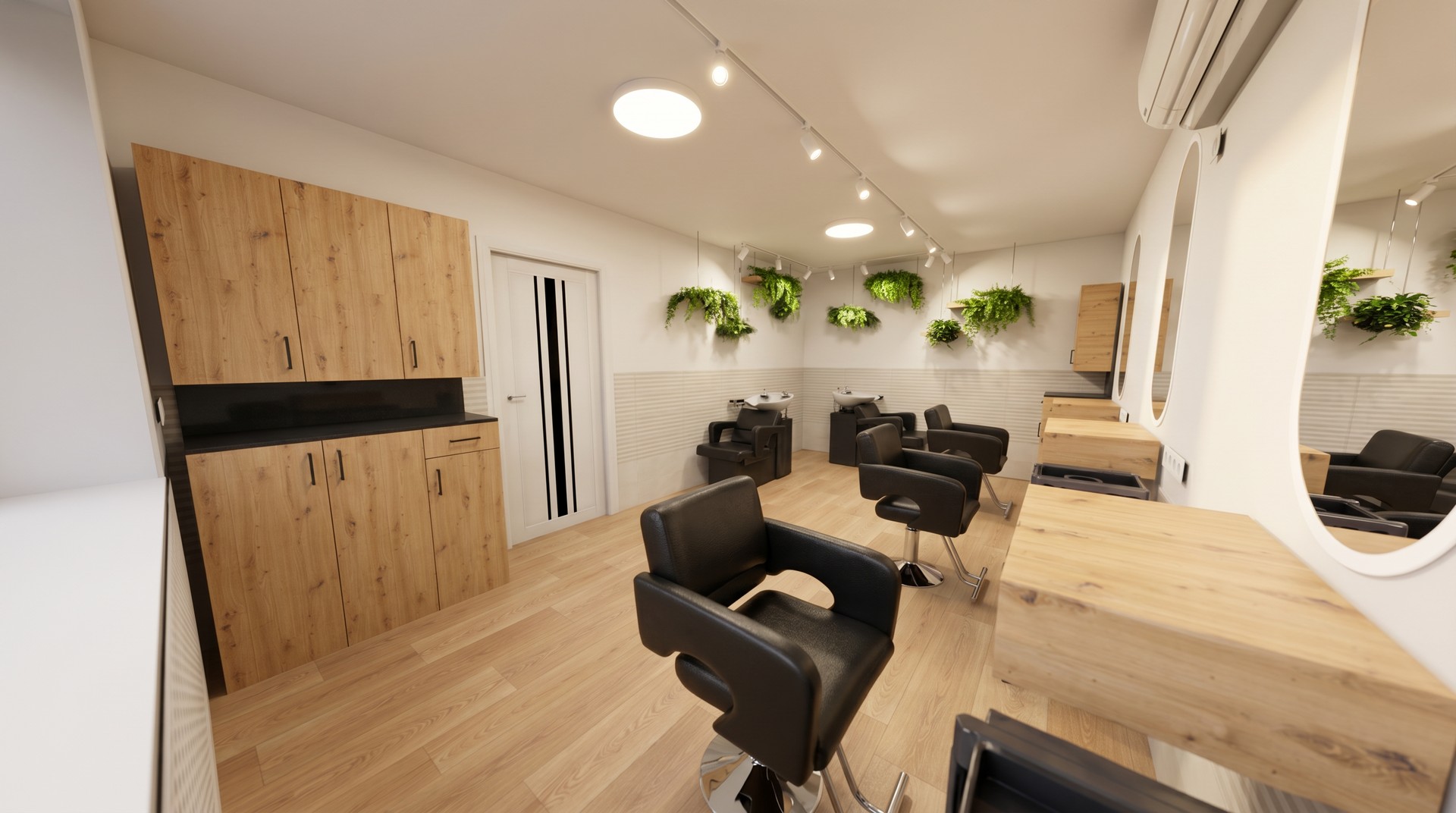
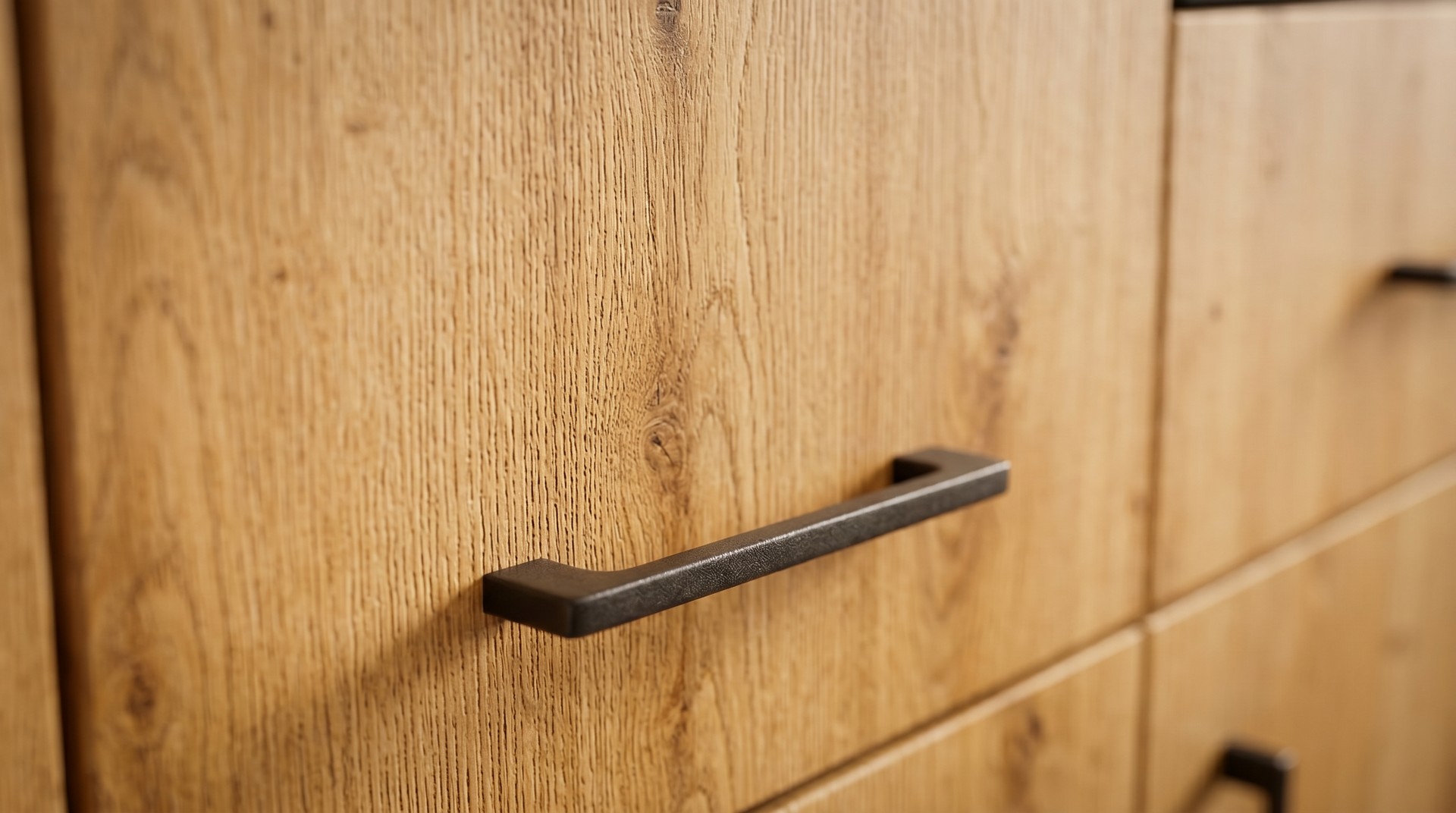
This is the heart of the salon. The busiest zone where stylists spend 10 hours a day. The main task here was to preserve the "air" between styling chairs and build perfect shadowless light. Wood textures of the "Artisan" chipboard "ground" the interior, making it warm, while black track rails on the ceiling pull the composition together.
Private Rooms: Maximum Function per Square Meter
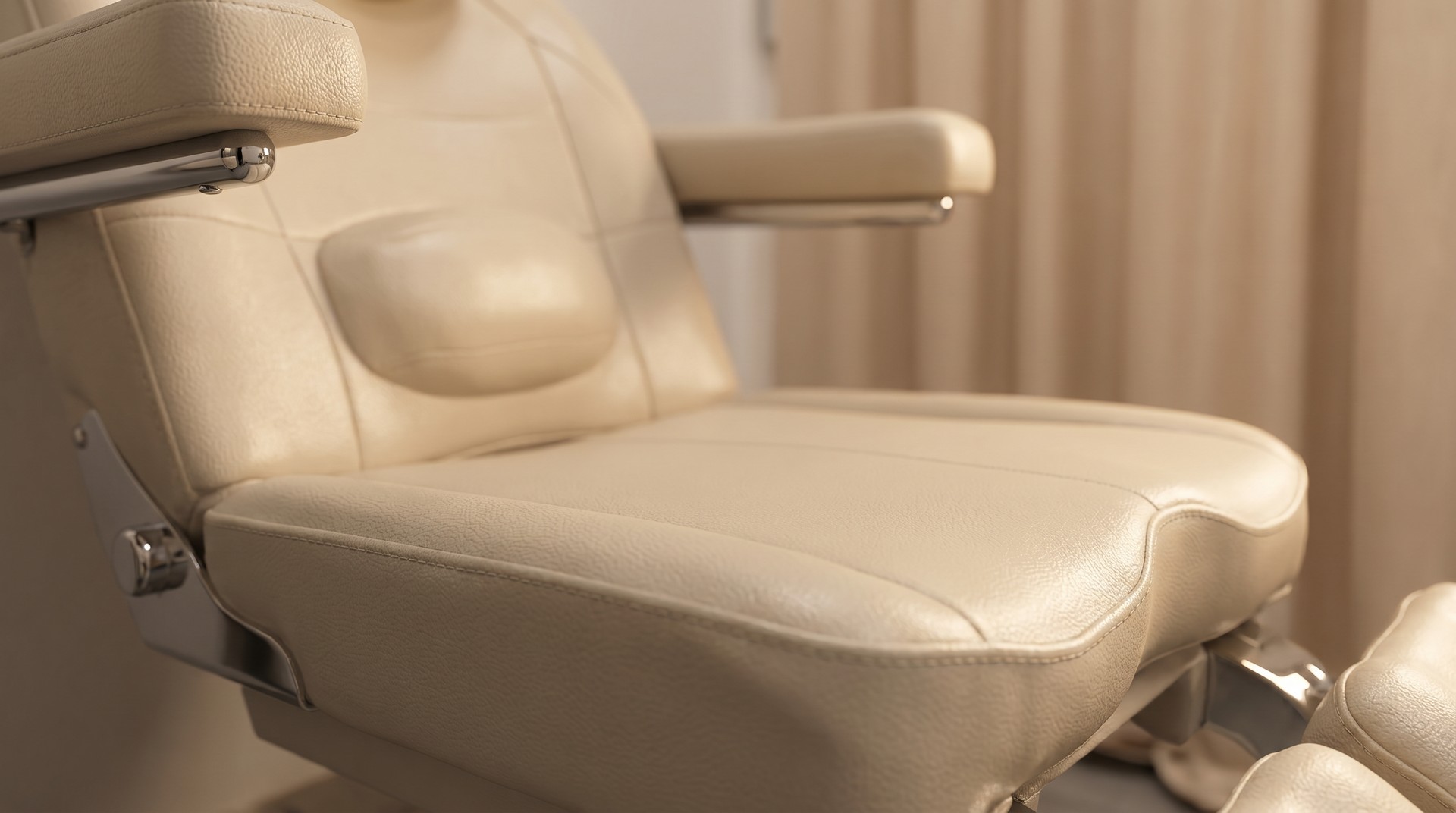
In the manicure and pedicure rooms, every centimeter must work. We built in hidden storage systems for tools, preserving overall visual silence. No protruding wires or superfluous details—only a pure focus on the procedure and the guest's comfort.
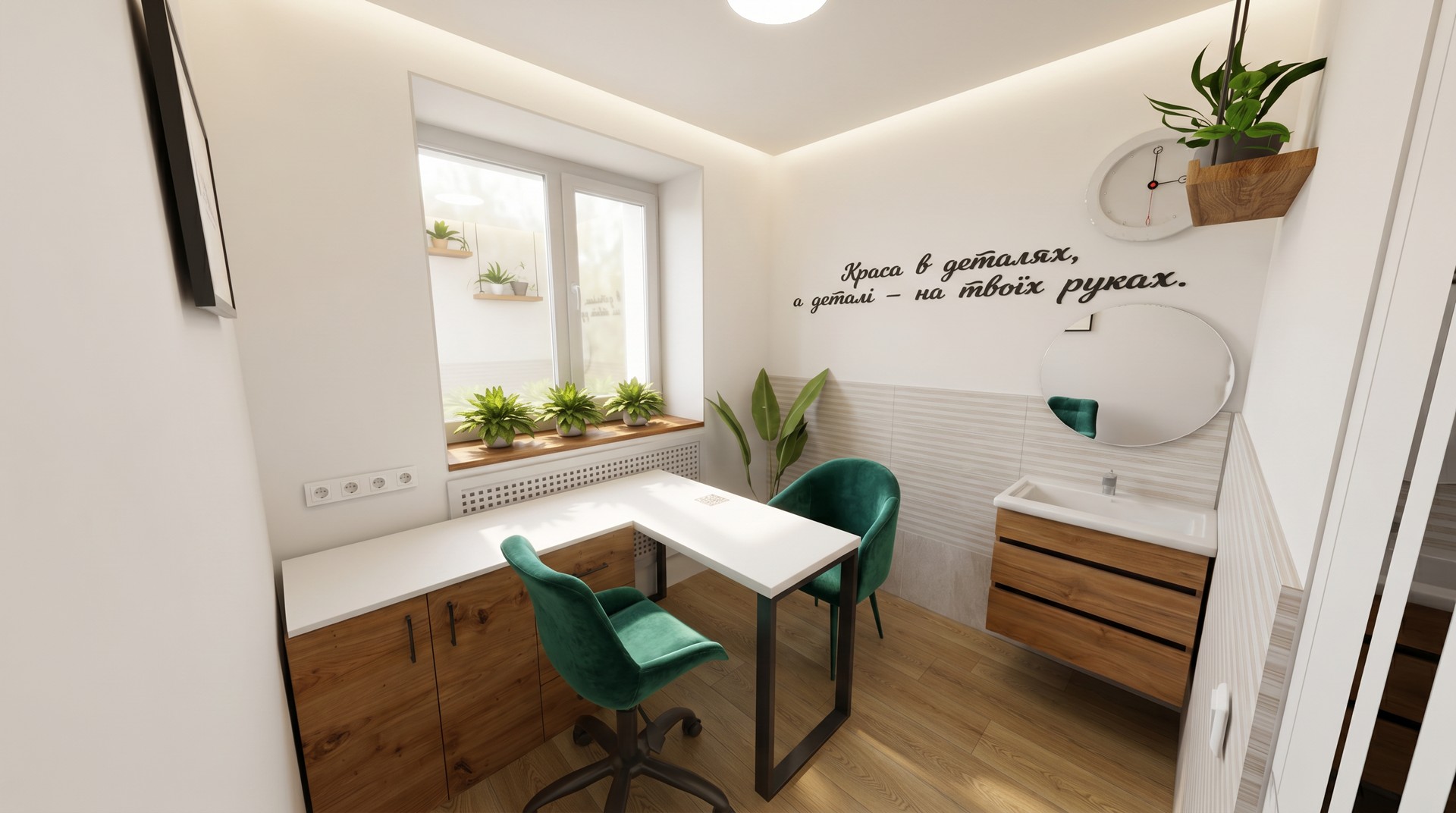
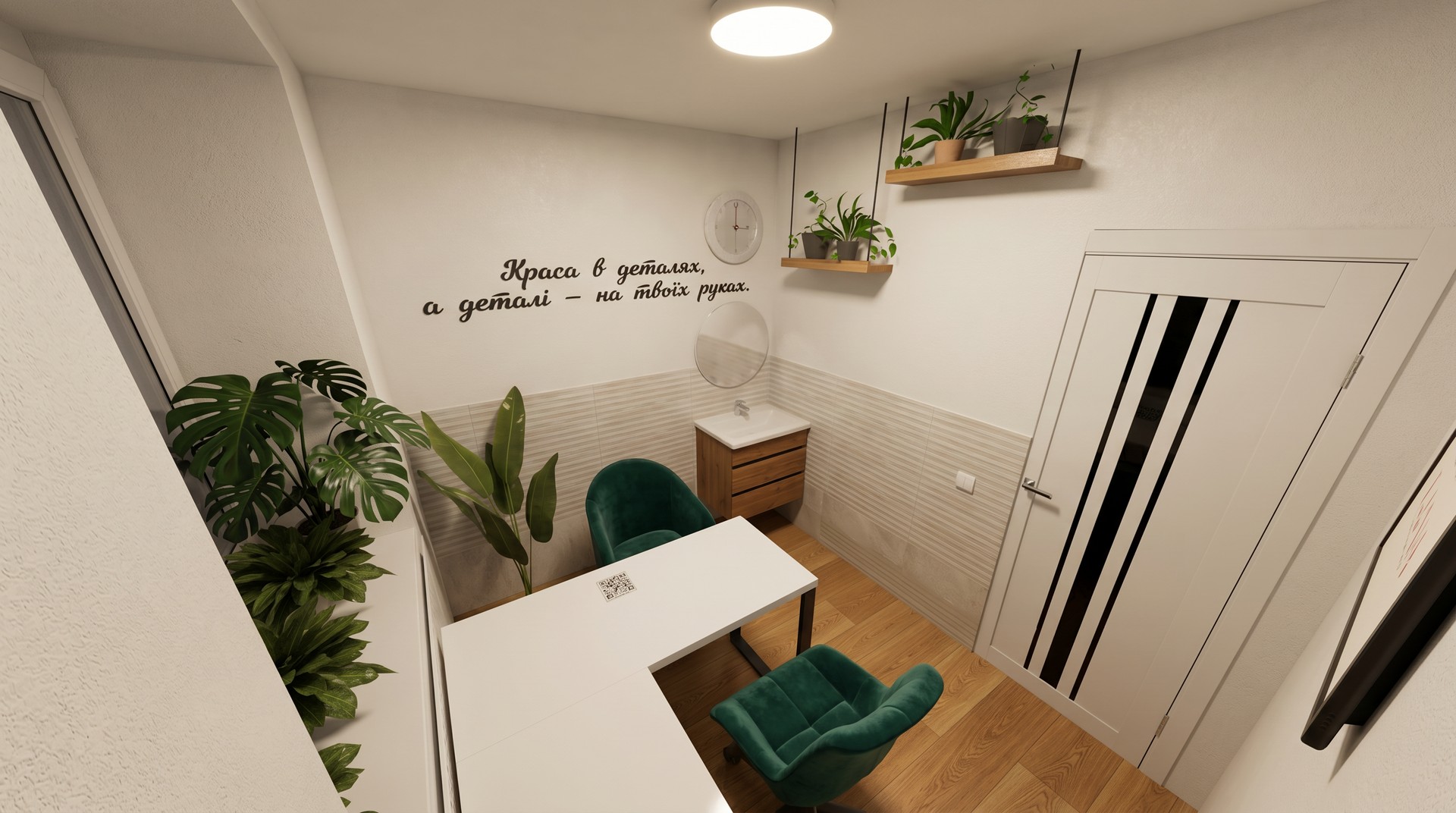
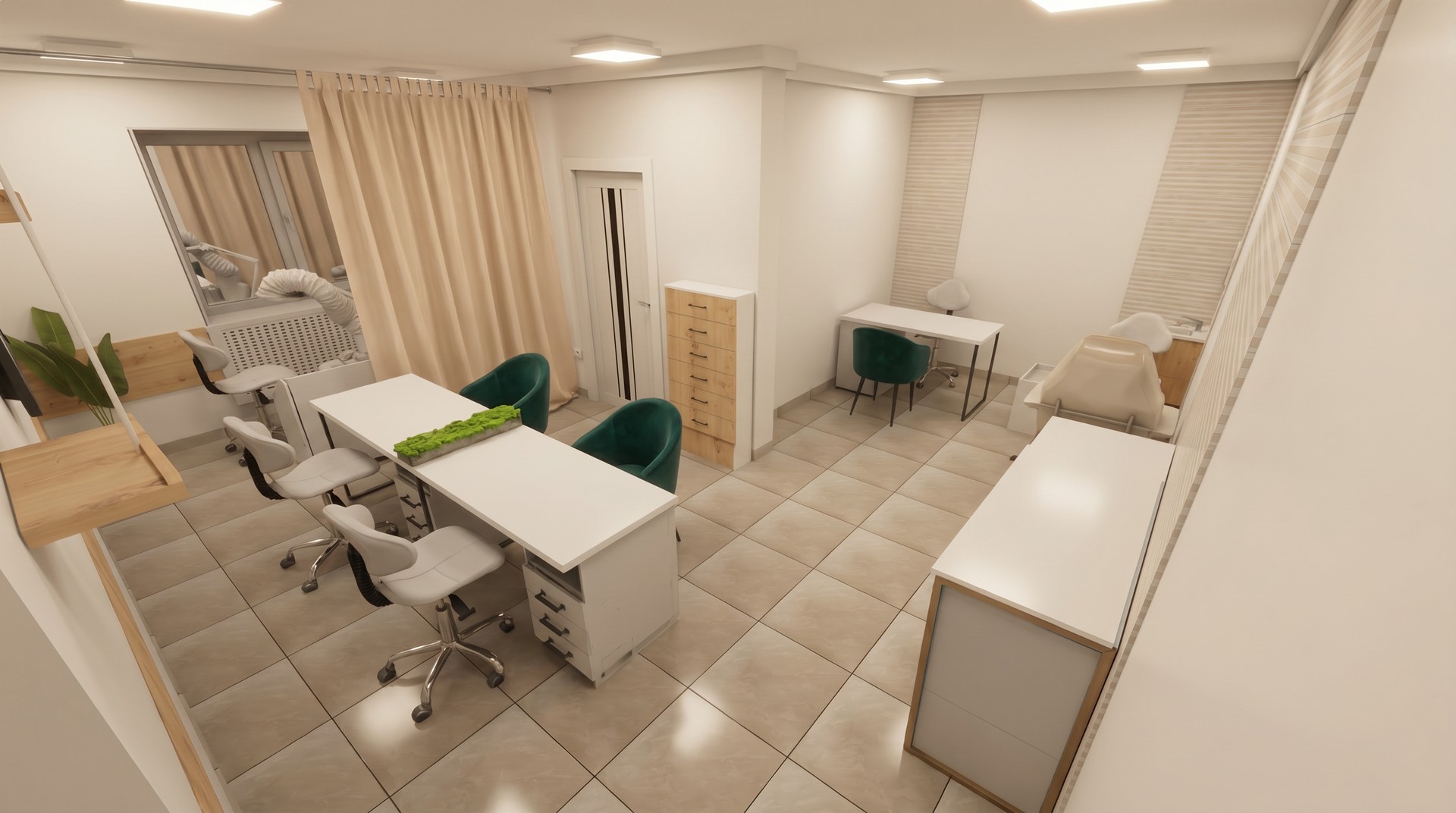
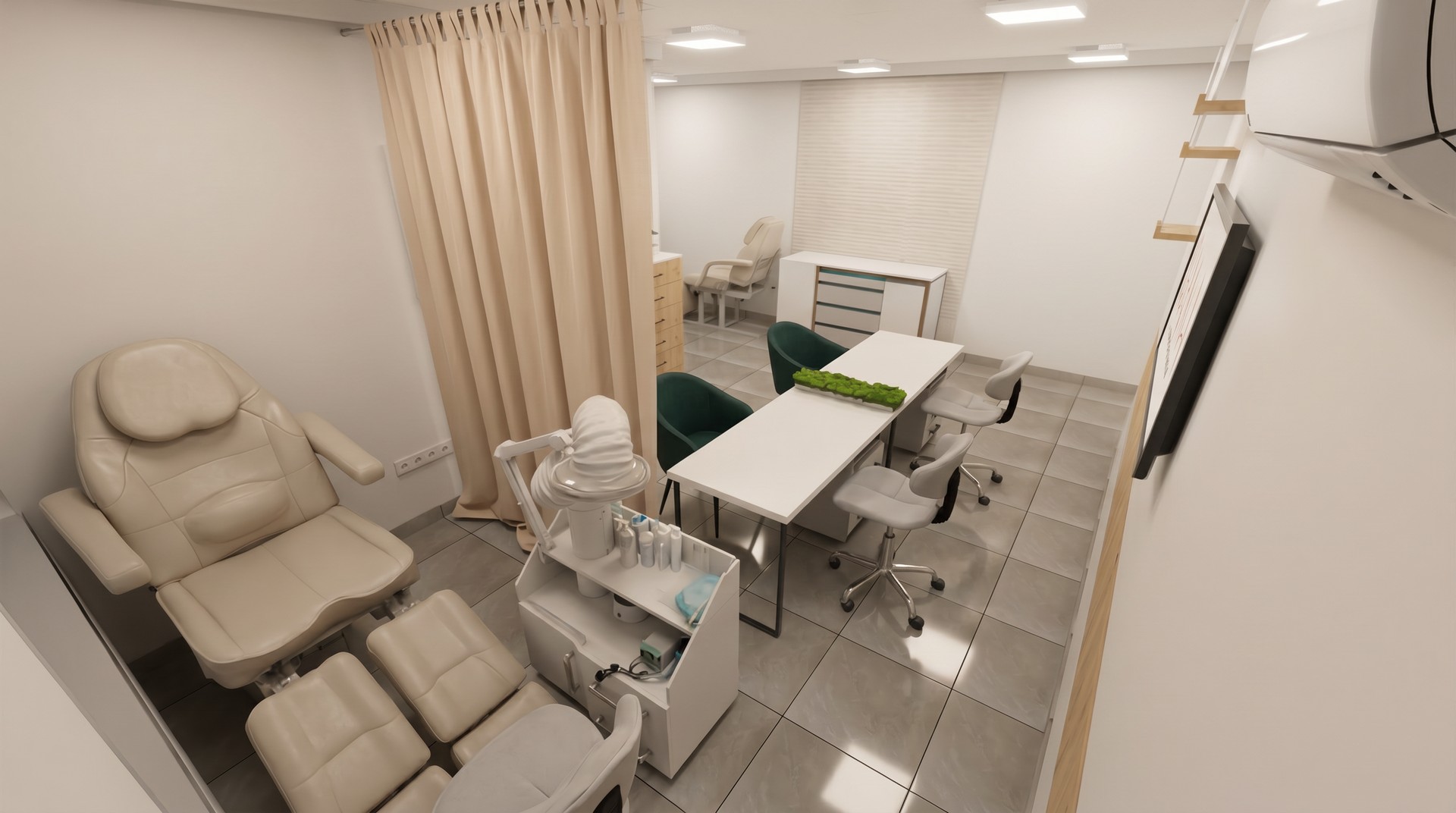
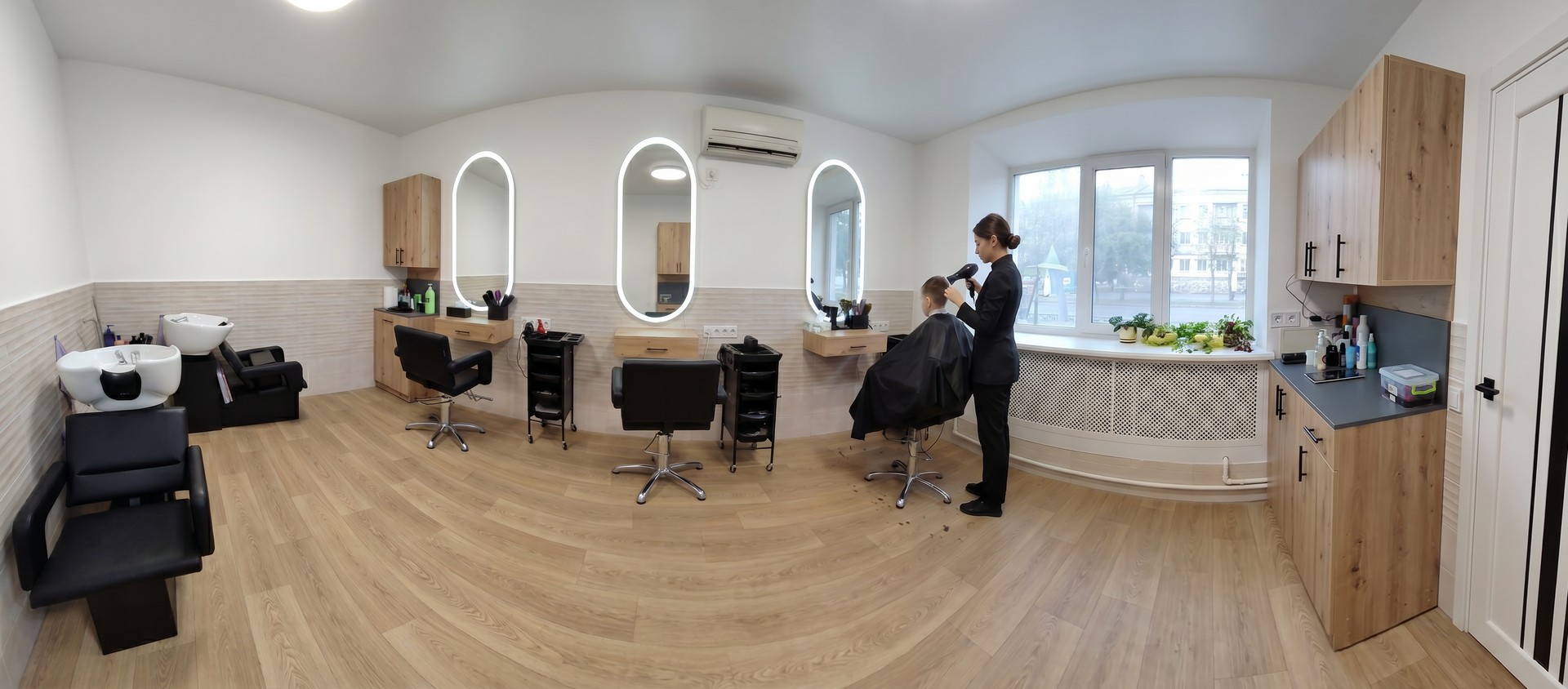
"I love it, it's really beautiful and comfortable! Thank you for the collaboration! Even though not everything worked out right away (due to the constraints of the room), overall I am very satisfied with our work. The atmosphere of the space turned out modern and stylish."
— Owner of the "LANA" salon
Does your renovation also hit technical difficulties and burning deadlines?
P.S. I prove that commercial space renovation can be a predictable process, not a disaster. I know, it sounds like sci-fi.
If you need comprehensive business brand packaging and a deep strategy for investors, explore my Visualogy method on the flagship website startfire.org.
 Facebook
 Startfire


