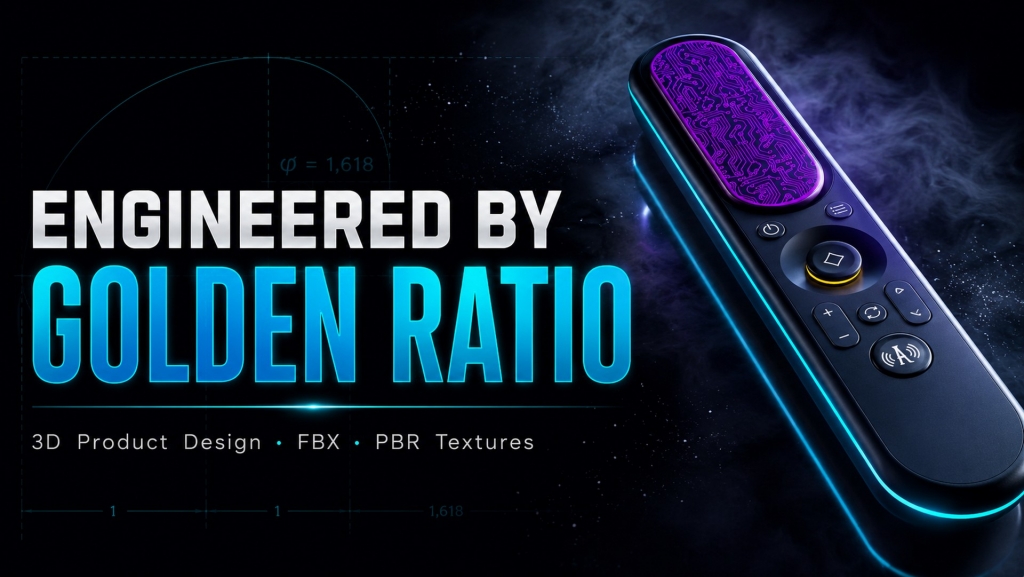

The Cost of a Millimeter on the Factory Line
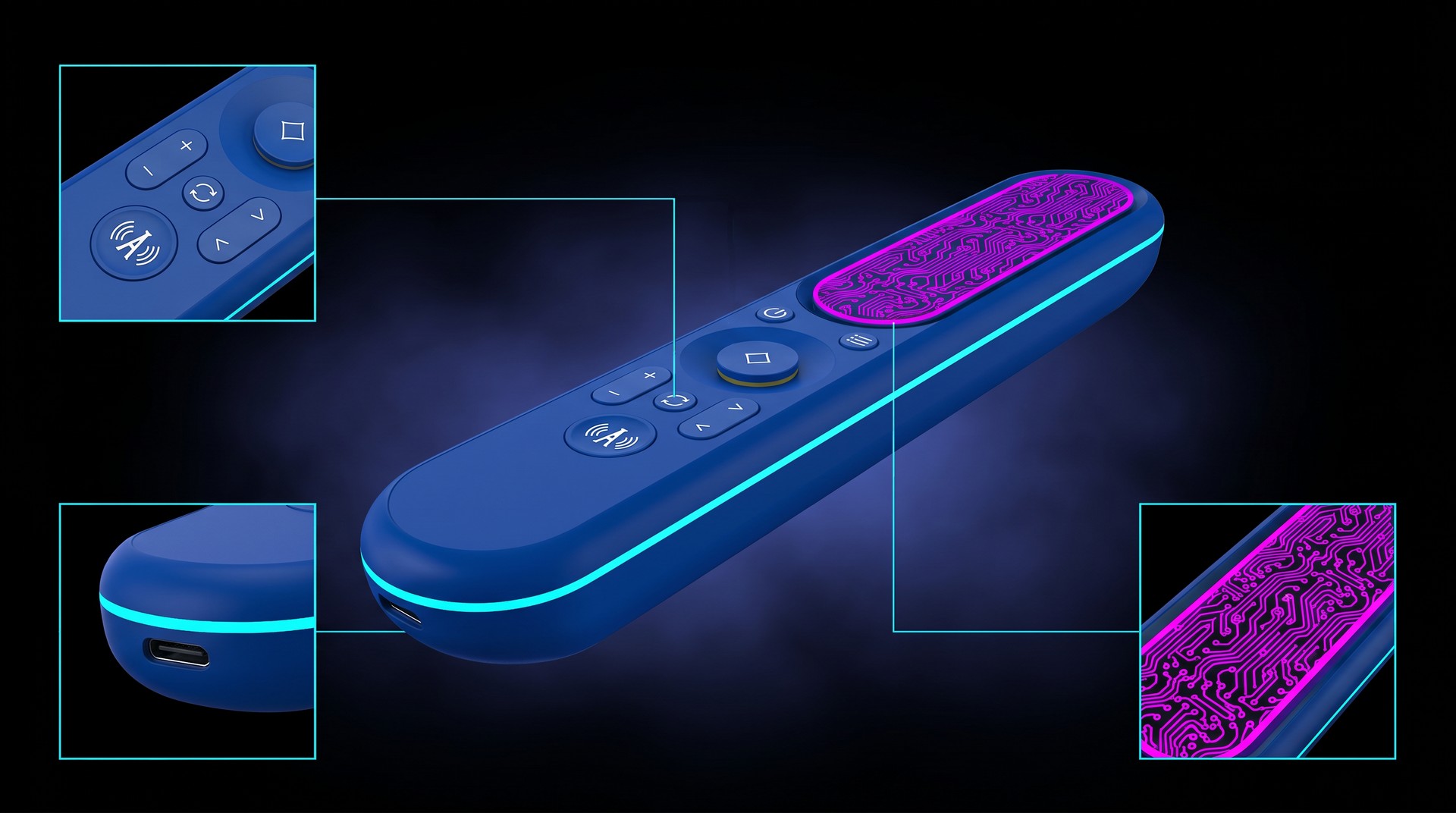
When the client approached me, their hardware project was at a critical stage. The previous contractor had missed deadlines, leaving behind a "raw" dummy that didn't account for new technical realities. There was a need to implement an AI assistant, add a USB-C port, and integrate a built-in scanner into the gadget's edge.
The risk was not in aesthetics, but in production. Every incorrect millimeter in the 3D mesh handed over to the Chinese engineers at the factory could result in colossal financial losses during mold creation. I had to not just "draw a pretty picture," but engineer a viable physical object, balancing between the rigid dimensions of electronics and the magical flair of a gaming artifact.
-
Engineering by the "Golden Ratio" Rule
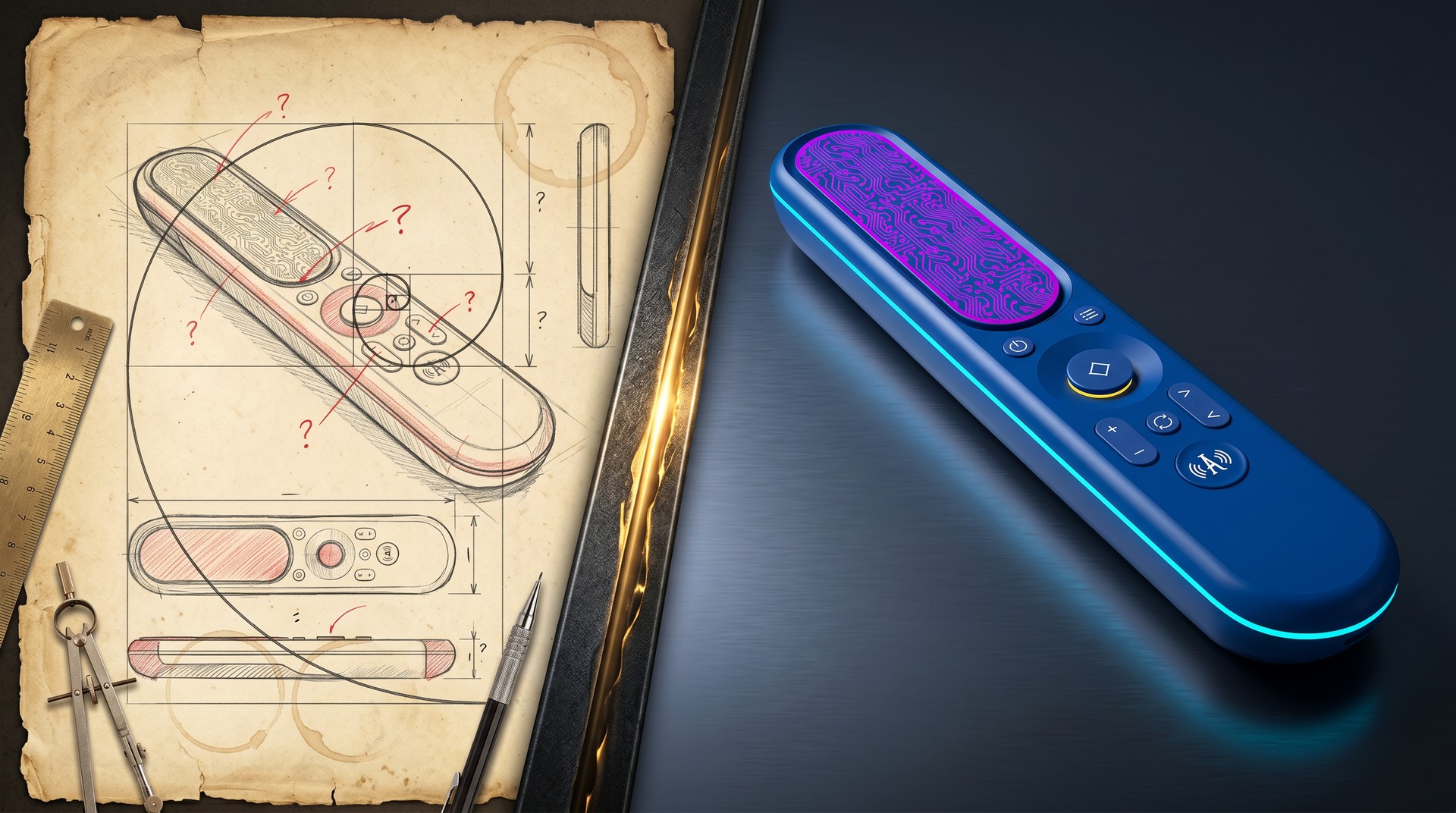
To avoid mistakes at the 3D sculpting stage, I started with the physical world. I printed device blueprints at a 1:1 scale, cut paper, and glued mockups onto cardboard. The client and I had to physically feel how the thumb rests on the main button.
The model's architecture was built on three rigid constants:
-
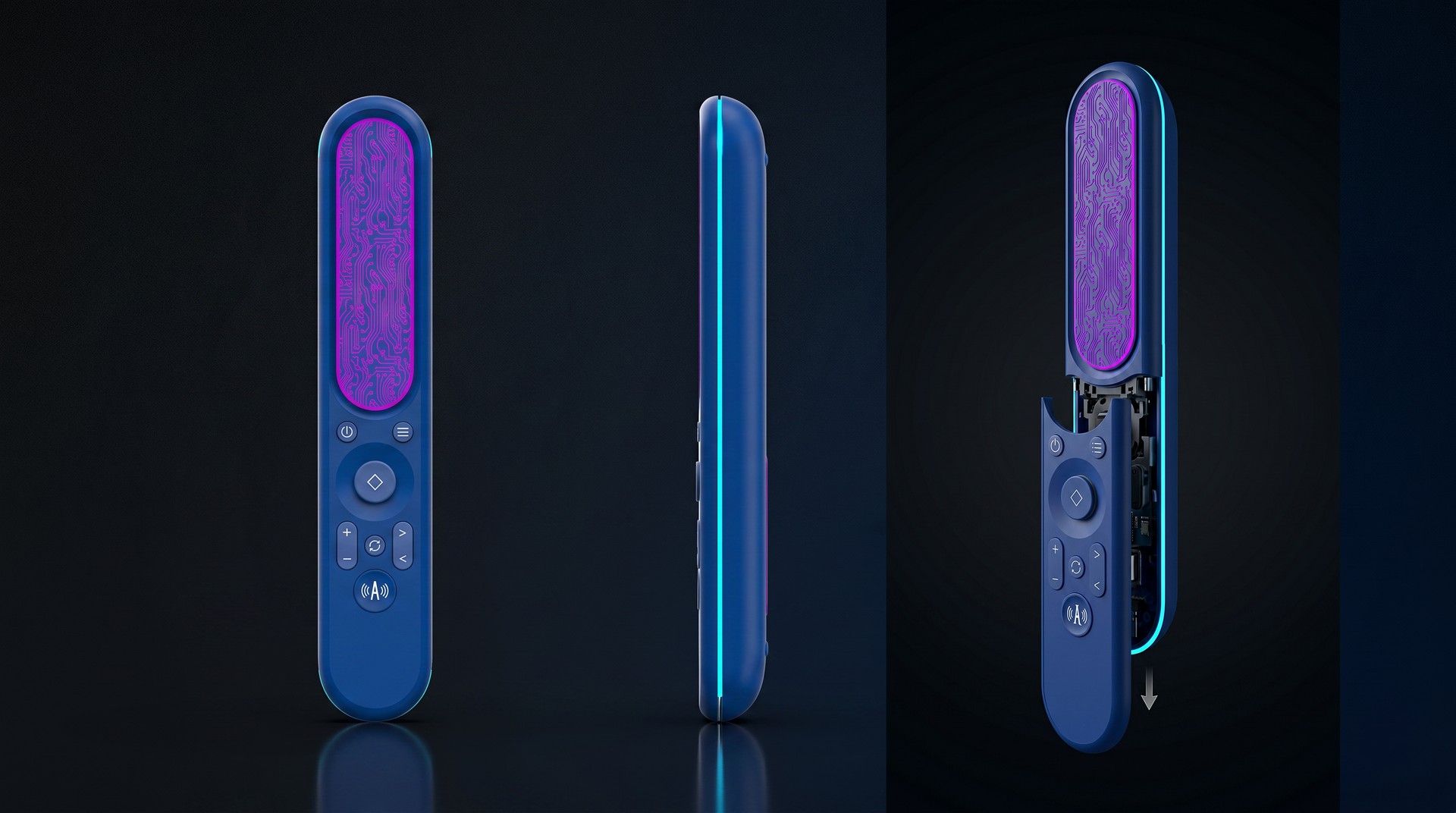
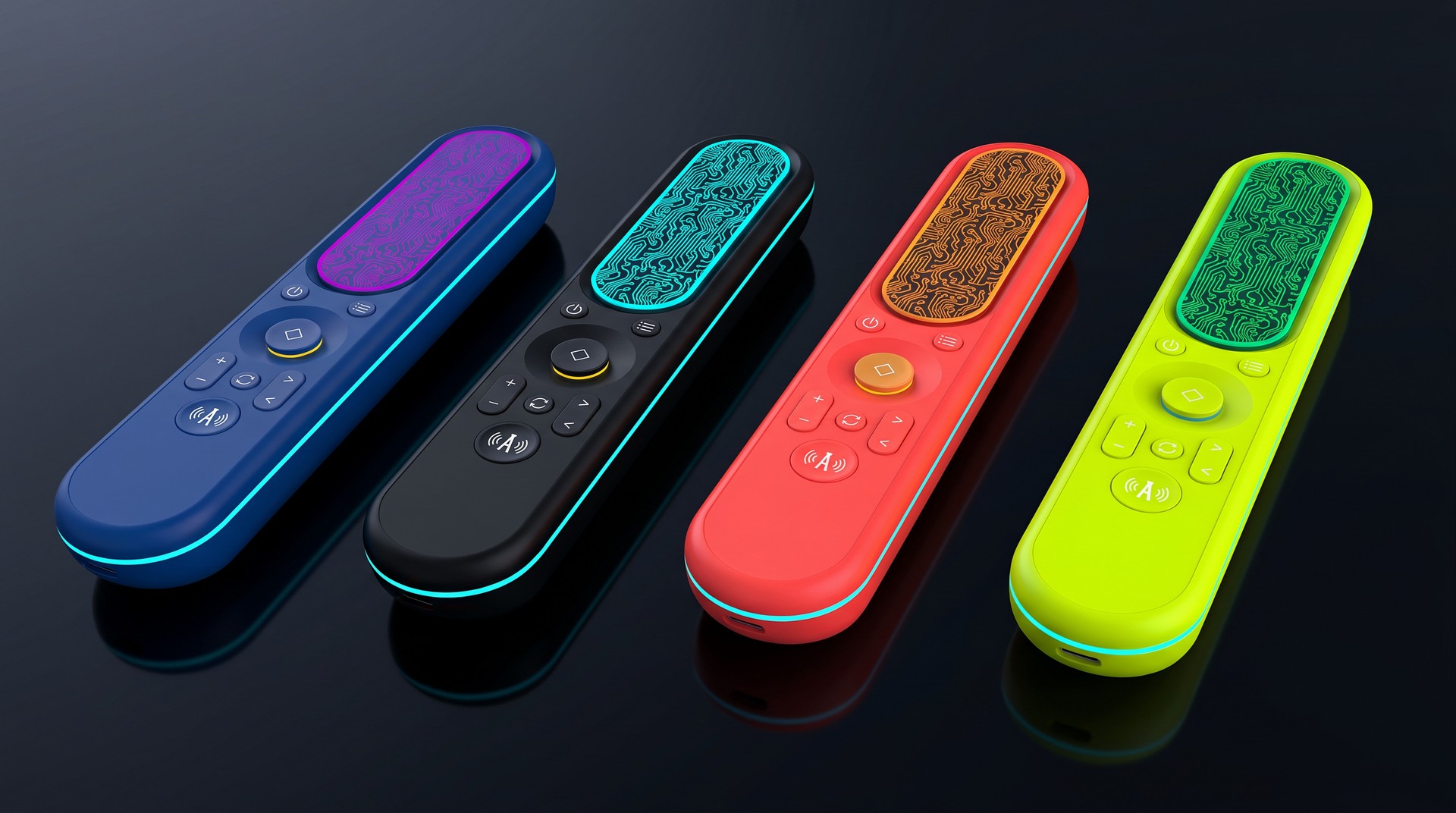
Grip Mathematics: I expanded the device to an exact 40 mm, allocating 32 mm for the central control panel. The placement of the main activation button was strictly verified by the "golden ratio" point to minimize accidental presses.
-
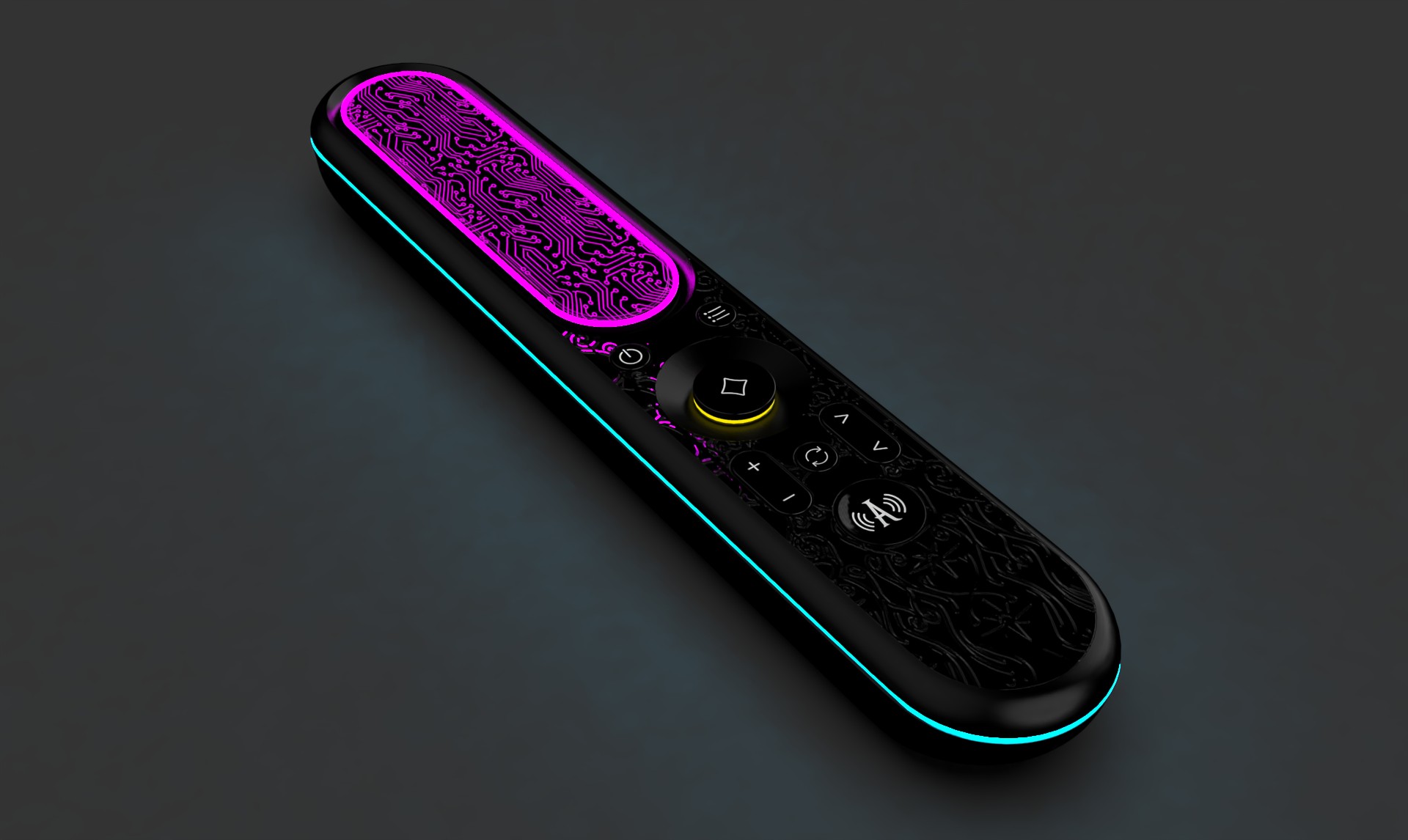
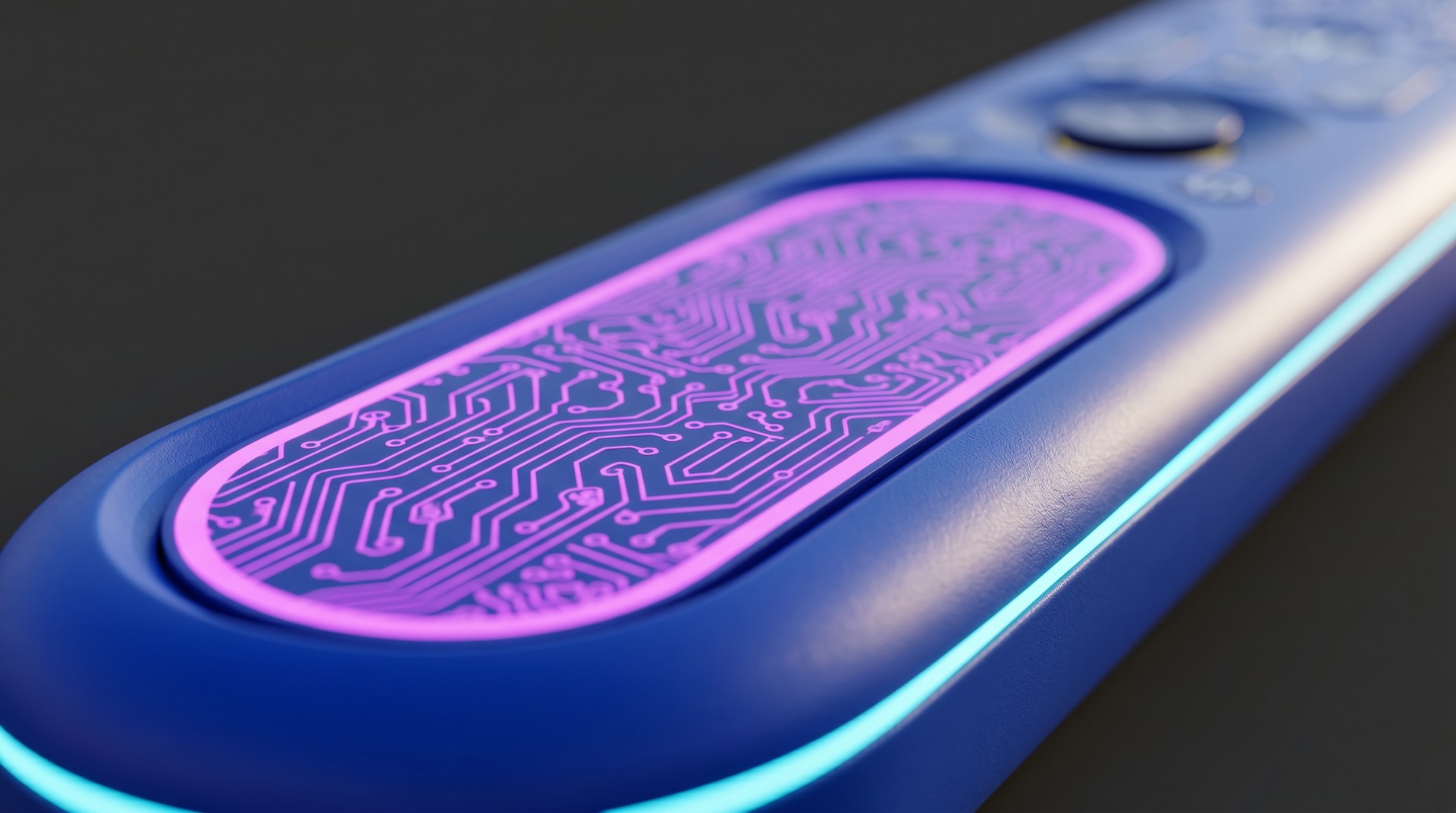
Tactile Pattern: The bottom part of the gadget required a complex ornament that couldn't be achieved simply with a normal map (bump). I manually modeled a complex polygonal mesh for the pattern, extruding it above the panel so it could be physically felt when using the real device.
-
Light Interface: I integrated a seamless LED strip into the housing's dividing seam, ensuring an aesthetic fusion of the backlight's "magic" and the engineering joints.
-
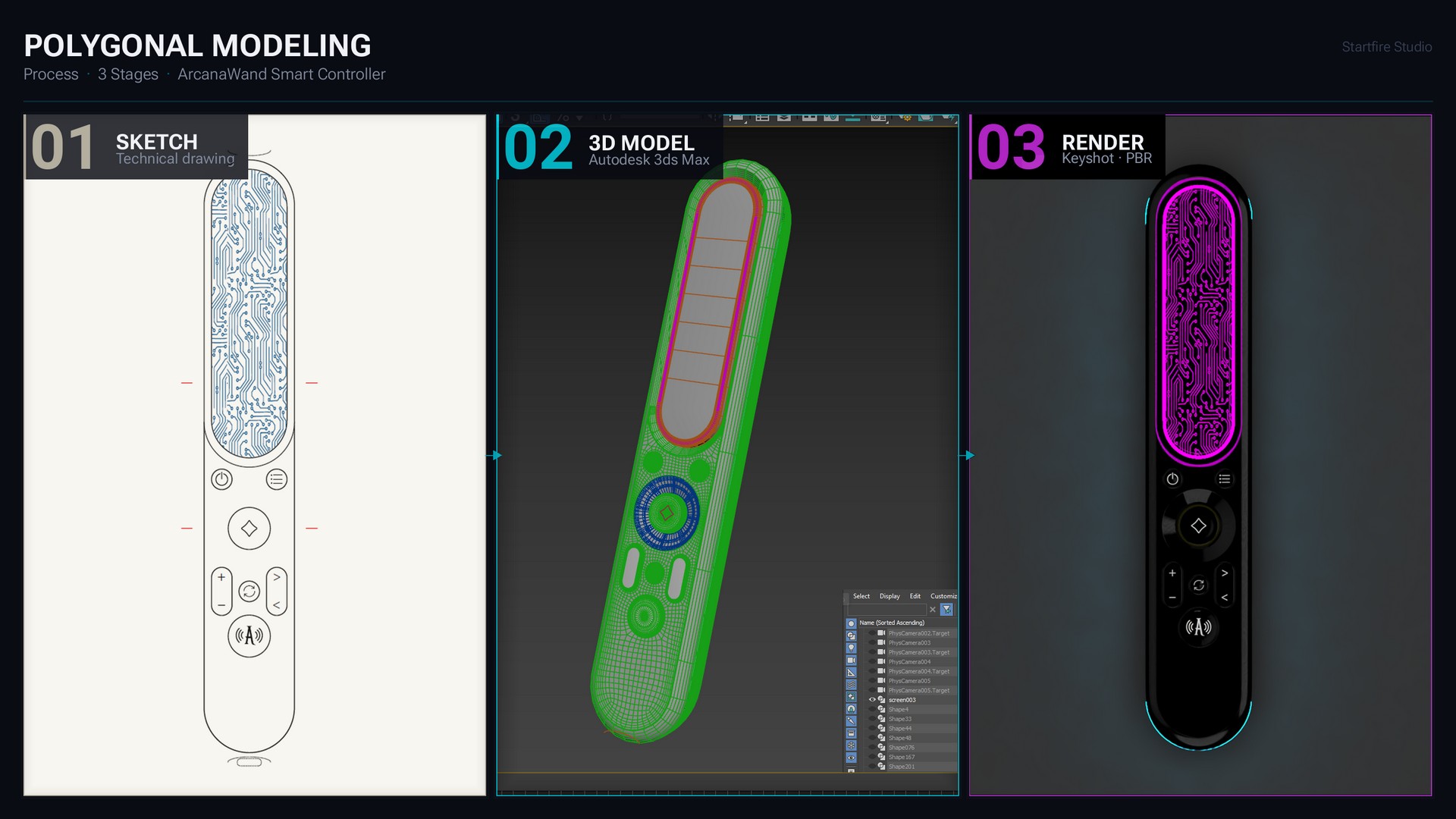
From Concept to Factory Standard
In the end, the Chinese engineers received not just an abstract render, but an uncompromising technical foundation. The final asset is a mathematically clean .fbx model with correct topology, accompanied by a full suite of PBR textures (roughness, normal map, ambient occlusion).
The Triumph of Form and Function
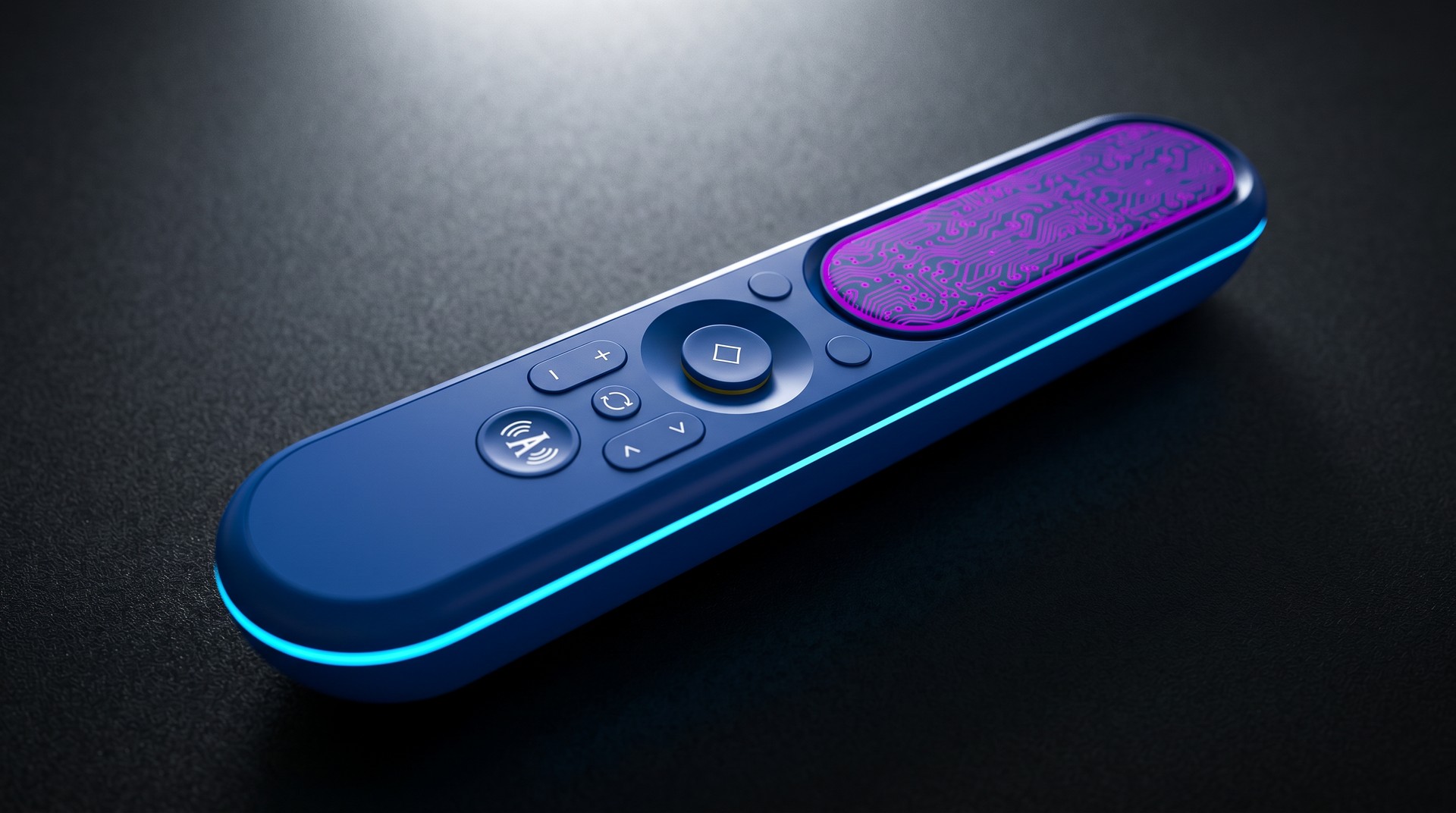
Flawless modeling allowed us not only to hand the project over to the production line but also to use the final renders for demonstrations at European exhibitions even before the first physical prototypes were released. As investors noted at the presentation: "The visualization looks Disney-level."
Is your technical concept stuck at the sketch stage?
→ Discuss my 3D project
P.S. If you are interested not only in technical execution but also in a deep business strategy for visualizing complex ideas — visit the Laboratory on my flagship website startfire.org.
 Facebook
 Startfire


